Choosing a bathroom fitter
A bathroom is one of the biggest single jobs most people ever have done in their home, and choosing the wrong fitter is where it goes wrong — the trader who disappears mid-job, the quote that doubles, the finish that looks nothing like the brochure. The good news is that the warning signs are usually there before you sign, if you know what to look for. This guide sets out the checks, the questions and the red flags that separate a proper team from a risky one, so you can book your full bathroom installation with confidence rather than crossed fingers.
Why the choice matters more than the price
It’s tempting to sort quotes by price and pick the cheapest, but a bathroom is precisely the wrong job to do that on. The work is hidden inside walls and floors, so corners cut on waterproofing, falls or pipework don’t show up on handover day — they show up months later as a leak, a smell or a tile that lifts. By then the cheap fitter is long gone, and putting it right means paying a second team to undo the first one’s work.
The three ways bathroom projects most often go wrong are all about the fitter, not the fittings: the trader who takes a big deposit and vanishes; the “day rate” job whose cost creeps until it’s dearer than a fixed quote would have been; and the finish that’s technically complete but visibly rushed — wonky tiles, gappy silicone, a wobbly screen. Every one of these is avoidable, and every one is predictable from how a fitter behaves before they start. That’s why the questions you ask at the quote stage matter more than the number at the bottom of it.
None of this means you should simply pay the most, either. The aim is the dependable middle: a proper team with real project management, a fixed written price and a portfolio you can go and look at — at honest Plymouth prices, which already sit around 9% below the national average. The checks below are how you find them.
The checks that actually matter
Anyone can call themselves a bathroom fitter — there’s no single licence for it in the UK. So the burden is on you to check a few things that genuinely separate the accountable from the risky. Run through these before you let anyone near your home.
Insurance
A proper fitter carries public liability insurance, and can show you the certificate without hesitation. It protects your home if something goes wrong on site. If a trader can’t or won’t produce it, that alone is enough to walk away — you’d be carrying the risk yourself.
A real portfolio
Not stock photos — actual bathrooms they’ve fitted, ideally locally. A settled Plymouth team can show you finished jobs, before-and-afters, and often homes “two streets away” you can relate to. A trader with no portfolio to show is a trader with something to hide.
The right trades covered
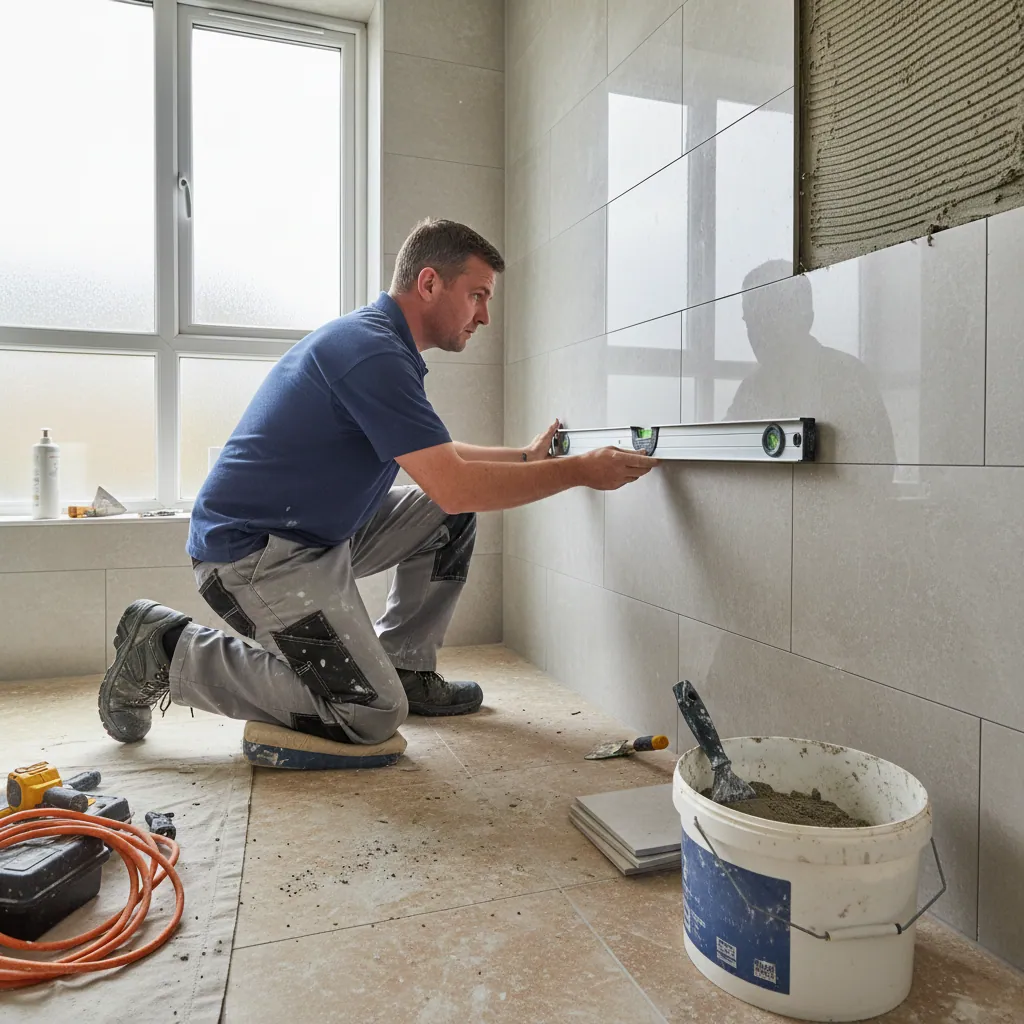
A bathroom needs plumbing and notifiable electrical work. Ask who does the electrics and Part P certification, and whether gas is involved. A one-man-band who “knows a bloke” for each trade is harder to hold accountable than one managed team.
A written, itemised quote
A fixed written quote that spells out what’s included is the single best protection against cost creep. Beware a vague day-rate figure with no scope — it’s the arrangement most likely to balloon. Compare quotes on what they include, not just the total.
A workmanship guarantee
A fitter confident in their work will guarantee it, and put the terms in writing. Ask how long the guarantee runs, what it covers, and who you call if something needs attention — the heart of good aftercare.
Genuine reviews
Look for reviews that mention real details — timescales kept, tidy sites, problems handled well. A pattern of the same complaints (no-shows, mess, unfinished work) is a clear signal. Reviews that are all five stars and no substance tell you less than a few honest three-star ones.
How to choose a bathroom fitter, step by step
Put the checks into an order and choosing becomes far less daunting. Here’s the sequence we’d recommend to anyone, even if the fitter they end up with isn’t us.
1. Shortlist two or three
Gather a small shortlist from local recommendations and genuine reviews — not just the top of a directory’s paid listings. Two or three is plenty; more than that and you’ll drown in quotes you can’t fairly compare.
2. Get them to survey in person
A trustworthy fitter visits, measures, checks your pipework and water supply, and asks about how you live. Be wary of anyone who’ll quote a full bathroom over the phone or from photos alone — they’re guessing, and guesses become extras.
3. Compare quotes on scope
Line the written quotes up side by side and read what each includes — removal of the old suite, making good, tiling, electrics, VAT. The cheapest headline often excludes the most. A slightly dearer all-in quote is frequently the cheaper job.
4. Ask the awkward questions
Insurance, guarantee, timescale, deposit, who’s on site each day. How a fitter answers tells you as much as the answers themselves — a good one welcomes the questions; a risky one bristles at them.
5. Check the paperwork
See the insurance certificate, get the quote and guarantee in writing, and be clear on payment stages. Never pay a large deposit up front — reasonable staged payments tied to progress protect you both.
6. Trust how they made you feel
Did they turn up when they said, listen, and explain things plainly without jargon or hard sell? A bathroom is a fortnight of someone in your home. If the first meeting felt off, the job usually will too.
Red flags to walk away from
Some warning signs are worth ignoring the rest of the quote over. If you spot any of these, our honest advice is to keep looking — a good fitter is worth waiting a few weeks for.
A large cash deposit up front
A demand for a big deposit — especially cash — before any work starts is the classic sign of a trader who may not come back. Reasonable staged payments tied to progress are normal; a hefty sum before day one is not.
No written quote or paperwork
“I’ll sort you a good price” with nothing in writing leaves you with no scope, no protection and no comeback. If a fitter won’t put the job and the price on paper, don’t let them start.
Pressure to decide today
“This price is only good if you sign now” is a sales tactic, not a fair offer. A settled fitter with a full order book doesn’t need to rush you — the pressure itself is the red flag.
Vague on insurance or guarantee
Waffle when you ask to see insurance, or a shrug about the guarantee, means the protection probably isn’t there. These are simple yes/no questions for a proper business — evasiveness is your answer.
Every one of these is about accountability. A bathroom fitter who’s insured, itemised, guaranteed and relaxed about your questions has nothing to hide — and that, far more than the lowest price, is what gets you a bathroom you’re glad you paid for.
How we measure up
We wrote this guide the way we’d want a member of our own family to choose a fitter — and we’re comfortable being held to every point in it. Here’s how we sit against the checklist, and against the three alternatives most Plymouth homeowners weigh us up against.
Named and accountable
Unlike a lead-generation directory that sells your details to whoever bids, we’re a named local team you meet before you commit. One project manager per job, one number to call, start to finish.
Local, not a faceless chain
We’re Plymouth-based and cover the South West, so you meet the people who’ll actually do the work — and can see finished bathrooms nearby, whether that’s a family room in Plympton or an accessible bathroom in Crownhill.
A proper team, not an odd-jobber
Insured, project-managed and guaranteed, with a real portfolio and the right trades under one roof — not a one-man-band juggling three jobs who disappears when a problem lands.
Fixed written quotes
You get one clear price that spells out what’s included, so there’s no creep and no “that wasn’t in it”. If strip-out genuinely uncovers something hidden, you hear it straight away — see our Plymouth cost guide.
Tidy site, kept timescale
We turn up when we say, tidy the site daily, and hold to a clear timeline — a typical full bathroom runs 7–10 working days. The worried bits — mess, money, how long — are exactly where we work hardest to reassure you.
Guaranteed and insured
Fully insured, with a written workmanship guarantee and real aftercare, so the relationship doesn’t end the day we hand back the key. It’s the difference between a job and something we’re proud to put our name on.
Five questions worth asking before you sign
You don’t need to be an expert to sort a good fitter from a risky one — you just need to ask a handful of plain questions and pay attention to how they’re answered. A proper team welcomes every one of these; a chancer gets uncomfortable. Here are the five we’d ask in your shoes, and why each matters.
The questions
- “Can I see your public liability insurance?” — a yes/no with a certificate, or a warning sign.
- “Who does the plumbing and the electrics, and how are they certified?” — you’re checking the notifiable work is properly covered.
- “Is the quote fixed and written, and what exactly does it include?” — the single best guard against cost creep.
- “What’s the guarantee, in writing, and who do I call afterwards?” — separates confident fitters from ones who’d rather not commit.
- “Can I see a bathroom you’ve finished locally?” — a real portfolio beats any amount of marketing.
What the answers tell you
Notice that none of these is technical — you’re not testing whether they can plumb, you’re testing whether they’re accountable. The fitter who answers all five easily, with paperwork to back it up, is showing you a business that expects to be around to stand behind its work. The one who deflects, waffles or bristles is telling you something too.
It’s the same principle whether you’re fitting a straightforward family bathroom or a more involved job like a full renovation that changes the layout. The bigger and more hidden the work, the more the answers to these five questions matter — because that’s exactly the work you can’t inspect once it’s finished. Ask them of every fitter on your shortlist, and the right choice usually makes itself.
Choosing a bathroom fitter FAQs
How many quotes should I get for a bathroom?
Two or three is the sweet spot. Enough to compare approaches and prices, but not so many that you can’t tell them apart or that arranging surveys becomes a chore. The key is to compare them on scope, not just the headline total — read what each includes for removal, making good, tiling, electrics and VAT. A slightly dearer all-in quote is often the cheaper job once the cheap one’s exclusions catch up with you.
Should I pay a deposit to a bathroom fitter?
A modest deposit to secure your slot and cover initial materials is normal and reasonable. What isn’t is a demand for a large sum — especially cash — before any work starts, which is the classic sign of a trader who may not return. Look for sensible staged payments tied to progress, agreed in writing. That protects both sides: you’re never far ahead of the work, and the fitter is paid fairly as they go.
Do bathroom fitters need to be qualified?
There’s no single licence to be a “bathroom fitter” in the UK, which is exactly why the checks in this guide matter. But specific parts of the job are regulated: notifiable electrical work must be done and certified under Part P, and any gas work must be carried out by a Gas Safe registered engineer. Ask who does each trade and how it’s certified. A proper team has the right people covered and can prove it.
What’s the biggest mistake people make choosing a fitter?
Sorting quotes by price and picking the cheapest. Because so much of a bathroom is hidden in walls and floors, corners cut on waterproofing or pipework don’t show on handover day — they surface months later as a leak or lifting tile, by which time the cheap fitter has gone. Choose on accountability instead: insurance, a real portfolio, a fixed written quote and a guarantee. Those are what get you a bathroom you’re glad you paid for.
Proud of every bathroom we fit
Put us to the test
Every check in this guide is one we’re happy to be measured against — insurance, portfolio, fixed written quote, guarantee and all. If you’re weighing up bathroom fitters in Plymouth, come and ask us the awkward questions. Tell us about your room and we’ll give you one clear, fixed written quote.