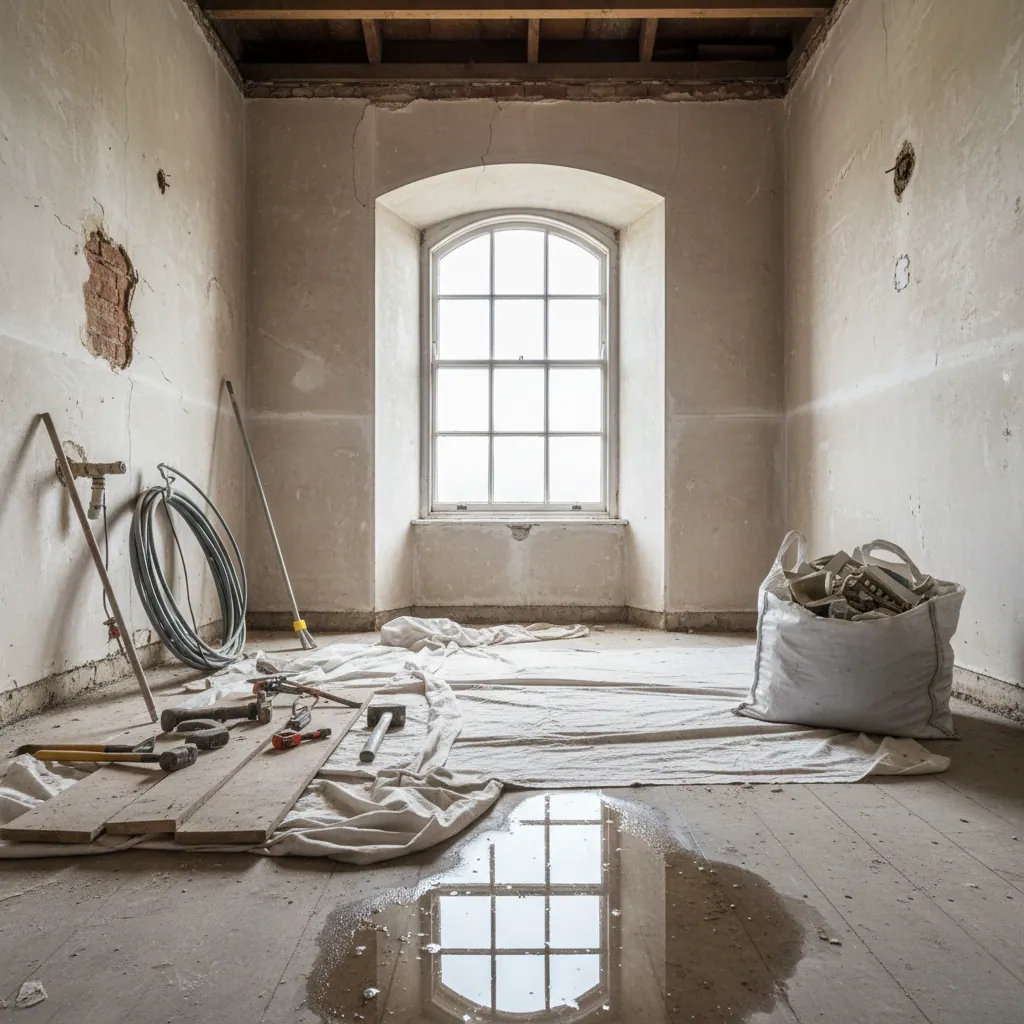
Bathroom renovation & remodelling, done properly
A bathroom renovation is the point where you stop patching up a tired room and start treating it like the room it should be. Maybe it’s a 1970s avocado suite that’s outstayed its welcome, a leaky enclosure you’ve nursed for years, or a layout that simply never worked. Renovating means making clear, honest decisions about what to keep, what to replace and what to rethink — then having a proper team carry it out cleanly, on a fixed price, with your house handed back tidy. We renovate and remodel bathrooms right across Plymouth, Plympton, Peverell, Mannamead and the wider South West, and we put the whole job on one written quote.
Renovation vs a full refit — and how to decide
People use “renovation”, “remodel” and “refit” almost interchangeably, but it’s worth pinning down what you actually need, because the difference shapes the budget, the timeline and the disruption. In plain terms, a refresh keeps the bones of the room and updates the surfaces and fittings; a full refit strips the room back to bare walls and floor and starts again; and a remodel changes the layout itself — moving the bath, the basin or even a wall. A renovation can be any of those, or a blend, and the right answer is the one that matches the condition of the room and what’s frustrating you about it.
Here’s the honest way we help Plymouth homeowners decide. The question isn’t “how much can we change?” — it’s “what’s actually wrong, and what’s the least disruptive way to put it right well?”
A refresh makes sense when…
- The layout works and you’re happy where everything sits.
- The suite is sound but dated — it’s the tiling, flooring and tired sealant dragging the room down.
- There’s no sign of leaks, rot or damp behind the surfaces.
- You want a noticeably newer-looking bathroom without the cost and mess of going back to brick.
A full refit or remodel makes sense when…
- The layout fights you every day — the door catches the basin, the bath’s in the wrong place, there’s wasted dead space.
- There’s hidden trouble: blown plaster, perished pipework, a soft floor, or damp behind the tiles.
- You’re switching format — bath to walk-in shower, or a bathroom to a wet room.
- You’re renovating the rest of the house and want the bathroom to match the standard.
If you’re genuinely torn, our advice is simple: get us to survey the room first. Half the time a refresh is all that’s needed and we’ll tell you so — there’s no sense ripping out a sound floor. The other half, we’ll find something behind the tiles that means a refit is the only way to do the job once and do it right. Either way you get a fixed written quote, so the decision is made on facts, not guesswork.
What to keep, what to replace — an honest assessment
The fastest way to waste money on a bathroom is to rip out things that were fine, and the fastest way to regret one is to keep things that weren’t. A good renovation is mostly about getting these calls right. Here’s how we think about each part of the room when we survey it.
Often worth keeping
- A sound bath. A good steel or acrylic bath in solid condition can often stay, especially if the layout works — a re-tile around it transforms the look for a fraction of the cost.
- A solid, level floor. If the subfloor is sound and dry, we build on it rather than tearing it up.
- Plumbing that’s well placed. If the pipework runs are in good condition and where you want them, there’s no reason to move them (more on that below).
- Good-quality, neutral tiling. Occasionally the existing tiling is fine and only the suite and flooring need updating.
Usually worth replacing
- Dated or cracked suites. Coloured suites, crazed enamel and wobbly WCs rarely justify keeping.
- Tired shower enclosures & trays. Failing seals and scaled-up screens are a common source of slow leaks.
- Perished sealant and grout. Cheap to redo, and the number-one giveaway of a tired bathroom.
- Old extractor fans and lighting. Often undersized or non-existent — the root cause of damp and mould.
- Anything hiding damp. Soft plaster, spongy floor, musty smell — these get put right properly, not tiled over.
The guiding principle is that you never tile over a problem. A renovation is your one easy chance to deal with what’s behind the surfaces while the room is open. Spend there, save on the showy bits if you must — a sound, dry, well-ventilated bathroom with mid-range fittings will outlast and outperform a glamorous one built on a damp floor.
Layout & remodelling options that add value
Remodelling is where a renovation earns its keep. Changing the surfaces makes a room look new; changing the layout makes it work. You don’t always need more space — you need the space used better. These are the remodelling moves that most often pay off for Plymouth homeowners, both in day-to-day comfort and in how the home shows to a future buyer.
- Bath to walk-in shower. The single most popular remodel. A walk-in shower or wet room opens the room up, suits modern living, and is a genuine selling point — see our note on whether walk-in showers add value.
- Keep a bath, but a smarter one. In a family home, retaining one bath protects resale value. A space-saving or shower-bath can give you both without crowding the room.
- Better storage built in. A vanity unit and a recessed niche turn clutter into clean lines — small change, big daily difference.
- Reclaim dead space. Boxing in pipework, repositioning a radiator, or swapping a swing door for a sliding one can free up surprising room.
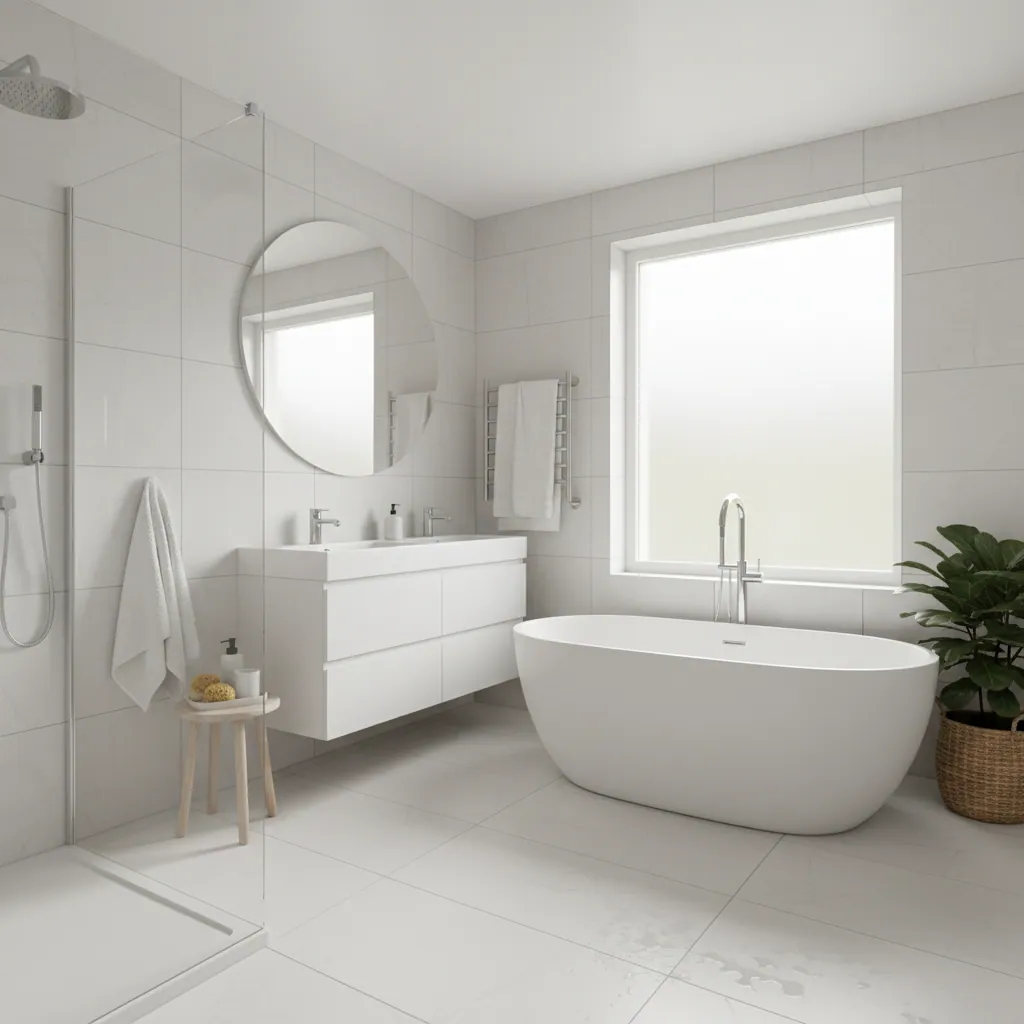
A good remodel is designed around how you actually live — who uses the room, when, and what drives you mad about it now. If you want to plan the layout properly before committing, our bespoke bathroom design service maps it out to scale so you can see the change before a single tile moves.
Modernising a tired or dated bathroom
Most of the bathrooms we’re called to renovate aren’t broken — they’re just dated. The suite still works, but the whole room feels stuck in the decade it was fitted. Modernising is less about ripping everything out and more about a handful of high-impact changes that drag a room forward twenty years. If your budget is tight, this is where it goes furthest.
Lose the coloured suite
Nothing dates a bathroom faster than a coloured suite or patterned border tiles. A clean white suite and large, calm tiles instantly read as current — and they don’t go out of fashion the way trends do.
Bigger, simpler tiles
Swapping small busy tiles for larger-format porcelain with fewer grout lines makes a room feel bigger, cleaner and far easier to maintain. It’s one of the highest-impact changes you can make.
Light & extraction
Layered, brighter lighting and a proper extractor fan transform how a bathroom feels and stop the damp and mould that age it prematurely. Often the cheapest upgrade with the biggest payoff.
Add a new vanity, a thermostatic shower, modern brassware and fresh flooring, and you have a bathroom that feels brand new even though half of it never came out. That’s the art of modernising: spending where the eye and the day-to-day live, and leaving the sound, hidden work alone.
Period & Victorian homes in Peverell, Mannamead & beyond

Plymouth has a lot of lovely older housing stock, and the Victorian and Edwardian terraces of Peverell and Mannamead come with their own renovation quirks. We renovate plenty of them, and the trick is respecting the house while bringing the bathroom up to modern standard.
- Out-of-true walls and floors. Period rooms are rarely square or level. We allow time to pack, level and prepare so tiling lands true rather than chasing the wonk.
- Lath-and-plaster & solid walls. Old wall build-ups need the right boarding and fixings, and chasing in new services has to be done carefully.
- Tired pipework & waste runs. Decades-old plumbing is often worth renewing while the room’s open — a renovation is the moment to do it.
- Keeping the character. A traditional-style suite, period-look brassware and the right tiling can feel completely in keeping while hiding thoroughly modern waterproofing and ventilation behind them.
The reward is a bathroom that suits the house — warm, characterful and clearly part of a period home — but that performs like a new build where it counts: dry, well-lit, well-ventilated and built to last.
Where your renovation budget goes furthest
Bathroom budgets are finite, so the question is always where to concentrate the money. After a lot of Plymouth renovations, our honest view is that the spending that pays you back day after day is rarely the flashy stuff. Here’s where a pound works hardest.
Spend here — you’ll never regret it
- Waterproofing and preparation. The invisible work that decides whether the room lasts five years or twenty-five.
- A good thermostatic shower valve. Steady temperature, daily comfort, and safety — worth every penny.
- Quality tiling labour. The same tile looks twice the price when it’s set perfectly. Skilled fitting shows.
- Proper extraction and lighting. Cheap to do, and they protect everything else in the room.
Save here — without anyone noticing
- Mid-range porcelain over natural stone. Near-identical look, far less cost and upkeep.
- Sensible brassware over designer names. Solid, well-made taps that simply work.
- Keeping the plumbing where it is. Often the single biggest saving — see below.
- A feature wall, not a feature room. One area of premium tiling reads as luxury for a fraction of tiling the lot.
For a full picture of where the money lands, we keep a detailed breakdown on our cost of a bathroom in Plymouth page, and a quick-answer guide to how much a new bathroom costs in Plymouth.
Reworking the room without moving the plumbing
This is one of the most useful things to understand before you renovate, because it’s where big money is won or lost. Moving plumbing — relocating the soil pipe, the basin waste or the bath — is the single most expensive change you can make. It means lifting floors, chasing walls, re-running waste at the right falls, and making good afterwards. It’s absolutely worth it when the existing layout genuinely doesn’t work. But a surprising amount can be transformed without touching where the water goes.
What you can change without moving plumbing
- Swap the bath for a walk-in shower in the same footprint.
- Replace the suite like-for-like in the existing positions.
- Re-tile, re-floor and re-light the whole room.
- Add a vanity around the existing basin waste.
- Upgrade the shower, screen, radiator and brassware.
Keeping the connections where they are can knock a meaningful chunk off the cost and a day or two off the schedule, with no compromise on the finished look.
The trade-offs of moving it
Sometimes the layout is the problem, and then moving plumbing is money well spent — a basin under the window, the WC tucked out of sight, the bath where it finally fits. The trade-offs to weigh up:
- More labour, more materials, a longer job.
- Floors up and walls chased, so more making good.
- Soil-pipe moves in particular need careful planning for falls and access.
We’ll always tell you honestly whether a move earns its cost, or whether a cleverer layout in the existing footprint gets you 90% of the benefit for far less.
New suite, shower, screen & vanity
The fittings are the part you see and touch every day, so they’re worth choosing well — but “well” rarely means “most expensive”. We help you spec a suite that suits the room, the household and the budget, and we fit it so it works flawlessly and looks the part.
- The suite. Basin, WC and (where you want one) bath, chosen to fit the space and the style — wall-hung for a clean, modern look, or traditional for a period home.
- The shower. A quality thermostatic valve is the upgrade people notice most: steady temperature and a proper drench head turn a daily chore into a pleasure.
- Screens & enclosures. A frameless or low-iron glass screen keeps the look crisp and the cleaning simple, sized around how you use the room.
- Vanity & storage. A vanity unit hides the basin waste and the clutter, and built-in niches keep bottles off the floor.
For a full new-suite installation rather than a partial renovation, see our full bathroom installation service.
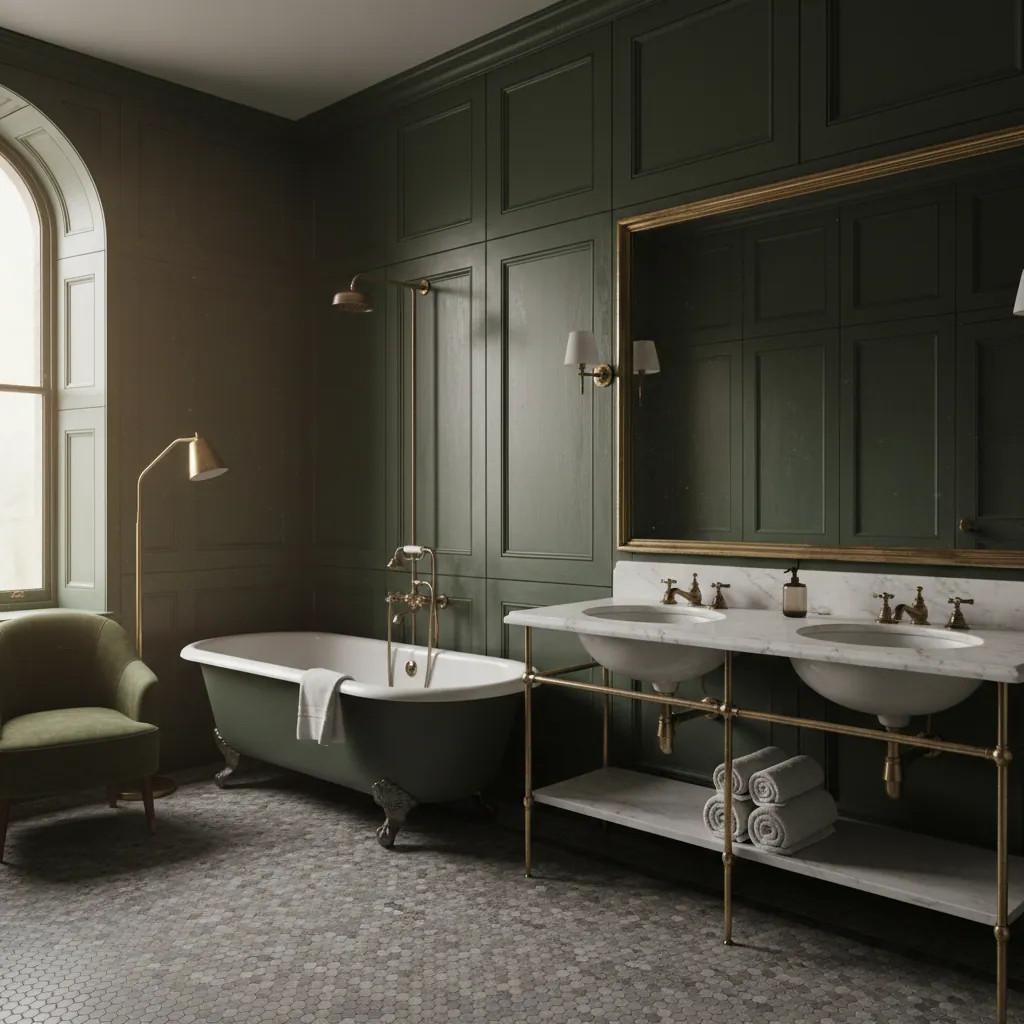
Fresh tiling, waterproofing & flooring

Tiling and flooring do most of the visual heavy lifting in a renovation, but the part that matters most is what goes behind them. Before a single tile is set in any wet area, we waterproof — a continuous tanking membrane in the shower zone and around the bath — so water can never track into the wall or floor. Tiles and grout shed water; they don’t seal it. The waterproofing underneath is what does.
- Wall tiling in large-format porcelain for clean lines, or a feature area for character, set true even on out-of-square period walls.
- Floor tiling chosen slip-resistant for safety, with the right flexible adhesive and grout.
- Sheet vinyl or LVT where a warmer, softer, budget-friendlier floor suits the room.
- Waterproofing first in every shower and bath zone — the non-negotiable that makes the rest last.
There’s a lot of choice in materials and finishes — our bathroom tiling & flooring page walks through the options in detail.
Lighting, extraction, plastering & making good
The difference between a bathroom that feels finished and one that feels fitted is in the details that don’t show up in the brochure — the lighting, the air, the flat walls and the clean edges. These are the parts a rushed job skips, and the parts we won’t.
Lighting upgrades
Layered lighting — bright, IP-rated downlights for the room plus task light at the mirror — transforms how a bathroom feels and functions. All wired and certified to current electrical regulations.
Extraction
A properly rated, often humidity-sensing extractor fan clears steam fast and is your best defence against condensation, mould and the premature ageing it causes. Fitted to meet ventilation regulations.
Plastering & making good
Walls re-skimmed flat and true, chases filled, ceilings sorted, and every junction left clean. The unglamorous work that makes the tiling and the paint look right.
Making good extends beyond the bathroom door, too. We touch up the landing, protect the route in and out, and leave the rest of your home as we found it. A renovation that ends with a perfect bathroom and a scuffed hallway isn’t finished — and ours don’t end that way.
Our renovation process, step by step
Here’s exactly how a renovation runs with us, so you know what’s happening in your home each day and there are no surprises.
1. Survey & design
We visit, assess the condition of the room, check for hidden trouble, and talk through what to keep, replace and rework. You get clear advice on whether a refresh or a full remodel is right — and one fixed written quote.
2. Strip-out
The old suite, tiling and any failed flooring come out. We protect floors and landings on the way through, keep the skip tidy, and inspect the subfloor and walls now they’re exposed.
3. Put right what’s behind
Any rot, damp, perished pipework or movement is dealt with properly before we build back up. This is the work that protects everything that follows.
4. First fix
Plumbing and electrics go in — feeds, wastes, the shower valve back-plate, wiring for lights, fan and any heating — set out for the new layout.
5. Boarding, waterproofing & plastering
Walls boarded and skimmed, wet zones tanked, floors prepared. The room gets flat, true and watertight before any tile is set.
6. Tiling & flooring
Walls and floor tiled with the right adhesives and grout, set true, then left to cure before anyone walks on them.
7. Second fix
Suite, shower, screen, vanity, taps, towel rail, lighting and extractor all fitted and connected. The room starts looking like the design.
8. Seal, test & final clean
Movement joints siliconed, everything tested, snags sorted, and the room left spotless. Then we walk you round it and hand over care notes.
A typical Plymouth bathroom renovation runs 7–10 working days on site. A straightforward refresh can be quicker; a full remodel that moves plumbing or tackles period quirks may take a little longer — and we’ll tell you which yours is before we start.
What a renovation costs in Plymouth
Every room is different, but these bands give a realistic feel for what a renovation costs locally. Because Plymouth runs roughly 9% below the national average on fitting costs, prices here sit a touch under what you’d pay up-country — and a full bathroom averages around £6,340. We put the whole job on one fixed written quote, not a day rate that creeps.
| Type of renovation | Typical Plymouth cost | What’s involved |
|---|---|---|
| Refresh layout kept |
£4,000–£5,500 | New suite or shower in place, fresh tiling, flooring, lighting and extraction. No plumbing moved. |
| Full refit back to bare walls |
£5,500–£7,500 | Stripped out, made good, fully tanked, re-tiled, new suite, shower, vanity, lighting and fan. |
| Remodel layout changed |
£7,500–£9,500 | As a refit plus moving plumbing, format changes (bath to walk-in shower), premium tiling or fittings. |
What drives the price up
- Moving plumbing — relocating the soil pipe, bath or basin.
- Hidden surprises at strip-out: rot, damp or perished pipework.
- Large-format or natural-stone tiling and skilled labour.
- Period-home quirks — levelling out-of-true walls and floors.
- Premium suites, designer brassware and underfloor heating.
What keeps it down
- Keeping the existing layout and plumbing positions.
- A sound, dry subfloor that doesn’t need rebuilding.
- Mid-range porcelain over natural stone.
- One feature area rather than tiling the whole room to premium.
- Sensible, well-made fittings over top-end designer names.
Realistic timeline & minimising disruption
Most Plymouth renovations take 7–10 working days. A refresh can be done sooner; a remodel that moves plumbing or sorts period quirks may run a little longer. Whatever the length, we know your house is still your home while we’re in it, and we work to keep it livable.
- One bathroom? We plan the sequence so the room is out of action for as little of the job as possible, and talk through arrangements before we start.
- Tidy every day. Floors protected, dust contained as far as we can, and the site swept before we leave each evening.
- One point of contact. A project manager who tells you what’s happening and when — no chasing, no mystery.
- A fixed schedule. We turn up when we say.
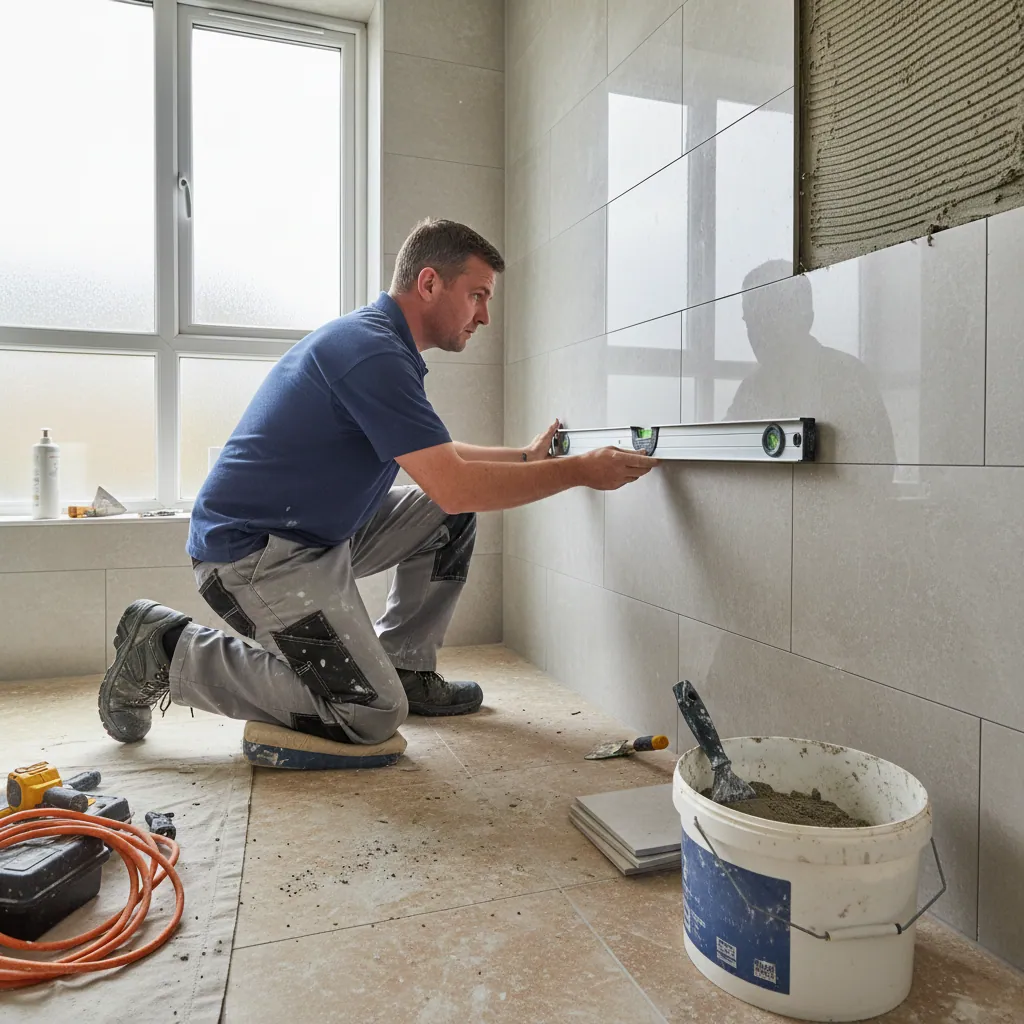
To plan around your household, our quick guide to how long it takes to fit a bathroom sets out what happens on each day of a typical job.

Guarantee & aftercare
A renovation is a real investment, so we stand behind it. Our workmanship carries a written guarantee, and we’re fully insured. If something needs attention after we’ve left, you call us, and we come back.
- Written workmanship guarantee on the fitting.
- Manufacturer warranties on the suite, shower and fittings.
- Care notes handed over at the end, so you know how to keep it perfect.
Common renovation pitfalls — and how we avoid them
We get called to put right plenty of renovations that went wrong elsewhere, so we know exactly where the traps are. Here are the classics, and how we head them off.
Tiling over a problem
The pitfall: damp or a soft floor tiled over to save time, only to resurface within a year.
How we avoid it: we inspect once the room’s open and put right what’s behind before building back up.
Skipping waterproofing
The pitfall: relying on tiles and grout to keep water out of the wall.
How we avoid it: a continuous tanking membrane in every shower and bath zone, before tiling.
The day-rate that creeps
The pitfall: an open-ended price that climbs as the job drags on.
How we avoid it: one fixed written quote agreed up front, so the number doesn’t move.
Undersized extraction
The pitfall: a weak or missing fan, so steam lingers and mould creeps back in.
How we avoid it: a properly rated, often humidity-sensing extractor as standard.
Moving plumbing needlessly
The pitfall: paying to relocate services that didn’t need moving.
How we avoid it: honest advice on whether a move earns its cost, or a cleverer layout does the same for less.
The trades who vanish
The pitfall: a fitter who disappears to another job and leaves yours half-done.
How we avoid it: a fixed schedule.
Bathroom renovation FAQs
How much does a bathroom renovation cost in Plymouth?
In Plymouth a bathroom renovation typically costs £4,000–£9,500, with a full bathroom averaging around £6,340. A refresh that keeps the layout runs from about £4,000, a full refit back to bare walls from around £5,500, and a remodel that moves plumbing or changes the format up to £9,500. Plymouth fitting costs sit roughly 9% below the UK average.
Is renovating cheaper than a full refit?
It can be, yes. If your layout works and there’s no hidden damage, a refresh — new suite or shower, fresh tiling, flooring, lighting and extraction with the plumbing left in place — is cheaper and quicker than stripping back to bare walls. A full refit costs more but is the right call where there’s hidden trouble or the layout doesn’t work. We survey first and tell you honestly which your room needs.
Can you modernise a bathroom without moving the plumbing?
Yes, and it’s one of the best ways to save money. You can swap a bath for a walk-in shower in the same footprint, replace the suite like-for-like, re-tile and re-floor, add a vanity and upgrade the shower, screen and lighting — all without touching where the water connects. Moving plumbing is the most expensive change, so keeping it in place often gives 90% of the transformation for far less.
How long does a bathroom renovation take?
A typical Plymouth bathroom renovation takes 7–10 working days on site. A straightforward refresh can be quicker, while a full remodel that moves plumbing or tackles period-home quirks may take a little longer. We confirm the timeline before we start and keep to a fixed schedule so the room isn’t out of action longer than it needs to be.
Does a new bathroom add value to my home?
A well-finished bathroom is one of the more reliable home improvements for both saleability and value, because buyers notice a tired bathroom immediately. The value comes from quality of finish and sound construction rather than the most expensive fittings. Keeping at least one bath in a family home, adding a walk-in shower, and good lighting and storage all read well to buyers.
What’s the difference between a renovation, a refit and a remodel?
A refresh keeps the room’s layout and updates the surfaces and fittings. A full refit strips the bathroom back to bare walls and floor and rebuilds it. A remodel changes the layout itself — moving the bath, basin or even a wall. A renovation can be any of these or a blend; the right choice depends on the condition of the room and what you want to change.
Should I keep my bath or switch to a walk-in shower?
It depends on the household. A walk-in shower opens the room up, suits modern living and is a strong selling point. But in a family home, keeping at least one bath protects resale value, since buyers with young children often want one. A space-saving shower-bath can give you both. We’ll talk through what suits your home and the way you live.
Do you renovate bathrooms in period and Victorian homes?
Yes — we renovate a lot of period properties, including the Victorian and Edwardian terraces around Peverell and Mannamead. We allow for out-of-true walls and floors, the right boarding for old wall build-ups, and renewing tired pipework while the room is open. You get a bathroom that suits the character of the house but performs like new where it counts.
Can I still use my bathroom during the renovation?
If it’s your only bathroom, it will be out of action for part of the job — there’s no way around having the suite removed during the work. We plan the sequence to keep that window as short as possible and talk through arrangements before we start. If you have a second WC or shower, we work around it so disruption stays minimal.
Do I need planning permission to renovate a bathroom?
Renovating an existing bathroom in the same room normally doesn’t need planning permission, but the work must meet Building Regulations — particularly ventilation, electrical safety and proper waterproofing. If you’re converting another room into a bathroom or moving the soil stack significantly, there may be more to consider. We handle the standards as part of the job.
Where does my renovation budget go furthest?
The money that pays back day after day is the work you can’t see: waterproofing, proper preparation, a good thermostatic shower valve, skilled tiling labour, and proper lighting and extraction. You can save without anyone noticing by choosing mid-range porcelain over natural stone, sensible brassware over designer names, and keeping the plumbing where it is — and putting premium tiling on one feature area rather than the whole room.
Do you provide a fixed quote for a renovation?
Yes. We survey the room, assess what needs keeping, replacing and reworking, and give you one fixed written quote covering the whole job. That means the price is agreed up front and doesn’t creep as the work goes on — no open-ended day rates and no surprises at the end.
Is my renovation guaranteed?
Yes. Our workmanship carries a written guarantee, and the suite, shower and fittings come with their own manufacturer warranties. We’re fully insured, so if anything needs attention after we’ve left, you call us and we come back.
Renovations across Plymouth & the South West
We renovate and remodel bathrooms throughout Plymouth and the surrounding South West, wherever you are. Find your area below, or browse the full areas we cover and our wider bathroom services.
Recent work
Bathrooms we’ve fitted around Plymouth
A few recent installations — real finishes from across Plymouth and the South West.

Proud of every bathroom we fit
Get a fixed price for your bathroom renovation
Tell us about the room and what’s frustrating you about it. We’ll visit, give you honest advice on whether a refresh or a full remodel is right, and hand you one clear written quote — designed around your home, finished properly. No surprises, no pressure.