Bathroom renovations and home value, honestly
A tired bathroom is one of the first things a buyer notices and one of the last things a seller wants to spend on. Yet a good bathroom renovation is among the most reliable improvements you can make to a Plymouth home — not because it prints money, but because a fresh, well-fitted bathroom removes a reason to knock the price down and makes the whole house feel cared for. This guide sets out what a renovation really does for value, what buyers actually pay for, and where to put your money for the best return.
Does a new bathroom actually add value?
The honest answer is: usually yes, but not in the simple way people hope. A bathroom rarely adds a neat pound-for-pound premium on top of your spend. What it does is more important — it protects the price your home would otherwise struggle to reach. A dated, discoloured or leaking bathroom gives every viewer a mental figure to deduct and a reason to hesitate. A clean, modern bathroom removes both, so the house sells closer to its true worth and often faster.
Estate agents consistently rank kitchens and bathrooms as the rooms that make or break a viewing, because they are the two most expensive to put right and the two buyers feel least able to tackle themselves. Somebody looking at a 1970s home in Plymstock or a Victorian terrace in Stoke will happily live with dated décor for a while, but a bathroom that looks like a job is a different matter — it becomes a bargaining chip. Renovating takes that chip off the table.
So the right way to think about value is not “how much will this add?” but “how much will a bad bathroom cost me when I sell — and how much smoother will the sale be without it?” Framed that way, a sensible renovation nearly always earns its keep.
It’s also worth separating two things people often blur: added value and added saleability. A bathroom rarely lifts a valuation the way an extension or a loft conversion might, because it doesn’t add floor space or a room. What it reliably does is make the space you already have sell — faster, more smoothly, and without a nagging deduction hanging over every viewing. In a slow market that saleability can matter more than a headline figure, because the home that shows well is the one that actually sells while others sit. So the honest promise isn’t “spend £6,000 and add £10,000” — it’s “spend sensibly and remove the single biggest reason a buyer would walk away or offer low.” That’s a return worth having, even if it never appears as a neat line on a valuation.
What buyers in Plymouth actually pay for
Value comes from the things a buyer registers in the first thirty seconds, not from the expensive details only you will ever notice. Spend where the eye lands and where doubt forms.
A clean, modern finish
Crisp tiling, a well-sealed shower, no mould in the grout and no cracked or stained fittings. More than anything else, a bathroom that reads as clean and cared-for tells a buyer the whole house has been looked after.
A good shower
A proper walk-in shower or a strong, reliable shower over the bath is high on almost every buyer’s list. Showers offer strong returns and broad appeal — our note on replacing a bath with a walk-in shower weighs it up.
Light, space and storage
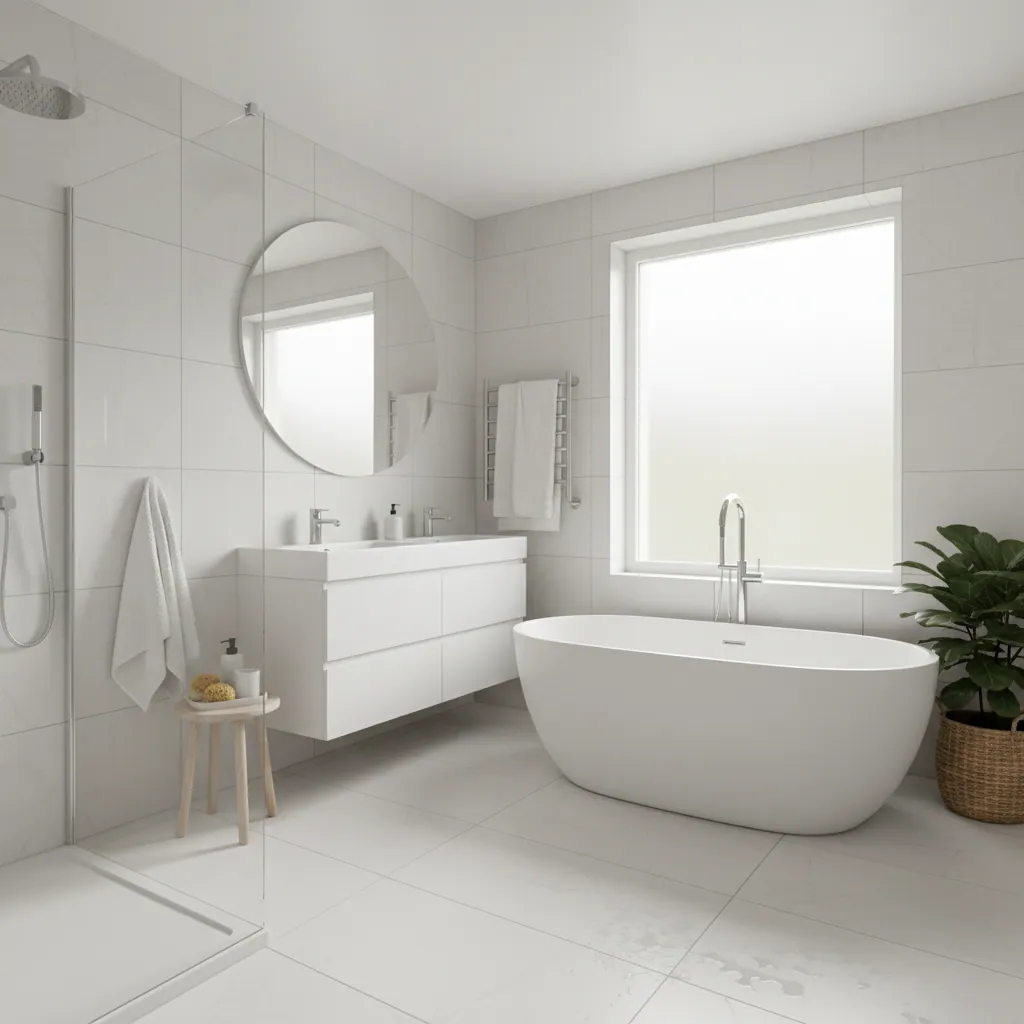
A room that feels bigger and brighter than its square footage, with somewhere to put things, always shows better. Larger tiles, a vanity and good lighting do more for perceived value than a premium tap ever will.
Notice what isn’t on that list: nothing exotic or expensive. Buyers pay for bathrooms that feel clean, work well and look calm. They rarely reward statement fittings, and they never see the money you sank into a designer brand they’ve not heard of. If you are renovating with resale in mind, our renovating on a budget guide shows where each pound goes furthest.
Where to spend for the best return
If your aim is value rather than pure indulgence, a clear order of priorities keeps the money working. Here is how we’d steer a Plymouth homeowner renovating with one eye on resale.
- Fix anything broken or leaking first. Damp, a failed seal or a soft floor scares buyers more than anything cosmetic — put the fundamentals right before the pretty bits.
- Get the tiling and sealing spot-on. Neat, well-sealed tiling is the single biggest signal of quality and the thing a survey and a buyer both scrutinise.
- Invest in the shower. A reliable, good-looking shower is high on buyers’ lists and earns its place in the budget.
- Choose a neutral, timeless scheme. White suite, calm tiles, warm accents. It appeals to the widest audience and dates slowly.
- Add light and storage. A vanity, a big mirror and layered lighting lift the whole room for modest money.
- Stop before you over-improve. Match the finish to the house and street, not to a magazine — the market only pays for so much.
What it costs — and the return in Plymouth terms
A full bathroom renovation in Plymouth typically costs between £4,075 and £10,870, with the average around £6,340. Because local fitting costs run roughly 9% below the UK average, Plymouth homeowners get a strong finish for less than sellers up-country pay — which quietly improves the return on every job. For a full breakdown, see our cost of a bathroom in Plymouth page.
Where the value is protected
- A smoother, faster sale with fewer price negotiations.
- No obvious “job to do” for a buyer to deduct against.
- A survey that flags nothing worrying in the bathroom.
- A home that photographs and shows well, drawing more viewers.
Where value leaks away
The two ways to lose money are over-improving for the street — fitting a £12,000 bathroom into a home the market caps out on — and under-doing it, where a cheap job looks cheap and fools nobody. The sweet spot is a mid-range renovation done properly: quality where it shows, restraint where it doesn’t. Getting that balance right is exactly the judgement a local fitter brings, because we know what Plymouth buyers in your postcode expect to see.
Which bathroom to prioritise — and adding a second
If your home has more than one bathroom, where you spend makes a real difference to value. The main family bathroom is the one every viewer sees and judges, so it earns the first and largest slice of the budget — a tired main bathroom drags on the whole house. A shabby en-suite matters less to most buyers but still counts in a home aimed at couples or professionals, where a smart en-suite is a genuine selling point. A downstairs cloakroom is the cheapest room to freshen and, if you don’t have one, adding a downstairs toilet is one of the more reliable value-adding moves in a family home — a second WC removes a daily frustration buyers notice immediately.
Adding a bathroom rather than just improving one is the bigger lever of all. Turning a spare box room or a slice of a large bedroom into an en-suite, or fitting a shower room into a loft conversion, can shift a house into a higher bracket by changing what it offers — a three-bed with two bathrooms sells differently from a three-bed with one. It’s a larger project than a renovation, but in the right house it’s where the strongest returns sit. The judgement is whether your home has the space to give up and whether the local market rewards the extra room; both are questions a fitter who knows Plymouth can help you weigh honestly before you commit.
Reading the Plymouth market before you spend
Value is always local, and Plymouth is a patchwork of very different markets sitting side by side. A bathroom that helps a home sell in one postcode can be over-specified in another, so the smartest spending decision you make is matching the finish to your street, not to a showroom or a magazine.
A period terrace in Mannamead or Peverell attracts buyers who value character and a considered, quality finish, and will notice a cheap job instantly. A family home in Plympton, Plymstock or Woolwell sells on practicality — a good shower, a family bath, storage and a room that’s easy to keep clean. A flat or smaller home in Stonehouse, Devonport or the city centre, often bought by first-timers, landlords or downsizers, rewards a clean, neutral, low-maintenance bathroom rather than anything lavish. And a rental anywhere wants durability and easy upkeep above all, since it has to survive tenants and turnarounds. Spend against the buyer your house actually attracts and every pound works; spend against an imagined one and you either over-improve or fall short. Knowing which is which, street by street, is exactly what a local fitter brings — and it’s the difference between a bathroom that helps sell the house and one that simply cost money.
Renovating to live in vs renovating to sell
The right renovation depends on why you’re doing it, and it is worth being honest with yourself about that from the start. If you’re staying for years, spend on the things you’ll enjoy daily — underfloor heating, a bigger shower, the finish you love — because your return is comfort, not resale, and you have time to enjoy it. If you’re selling soon, the calculation flips: neutral, broadly appealing and impeccably finished beats personal taste every time, because you’re building for a stranger’s approval, not your own.
Most people sit somewhere in between — improving a home they’ll enjoy for a few years before moving on. For them the answer is the reassuring one: a well-designed, neutral, properly fitted bathroom serves both goals at once. You get a room you love now and one that helps the house sell well later, with no compromise between the two. If a sale is on the horizon, our guide to renovating a bathroom before selling focuses specifically on the quick, high-impact moves that matter most to buyers.
Frequently asked questions
How much value does a new bathroom add to a house?
There is no fixed figure, and any promise of a precise percentage is guesswork. What a good bathroom reliably does is protect your asking price — it removes the deduction a dated or faulty bathroom invites and helps the home sell closer to its true worth, often faster. In Plymouth, where a renovation averages around £6,340 and local costs run about 9% below the UK average, that protection comes at a sensible price.
Is it worth renovating a bathroom before selling?
Usually, yes — but keep it neutral and don’t over-spend. A clean, modern bathroom takes away a buyer’s biggest reason to negotiate on price and makes the whole house feel cared for. The aim is to remove doubt, not to indulge personal taste, so a mid-range renovation done well beats an expensive statement bathroom.
What adds the most value in a bathroom?
The unglamorous fundamentals: neat, well-sealed tiling, a good reliable shower, a clean modern suite and a light, uncluttered feel with proper storage. Buyers pay for a room that looks cared-for and works well, not for expensive fittings they won’t recognise.
Can you over-improve a bathroom?
Yes. Fitting a luxury bathroom into a modest home rarely returns the outlay, because the local market caps what buyers will pay regardless of the room. The trick is to match the finish to the house and the street — quality where it shows, restraint where it doesn’t. A local fitter who knows your area can steer that balance.
Does a walk-in shower add more value than a bath?
Often, especially for downsizers and older buyers, a good walk-in shower is a strong draw. But in a family home, keeping at least one bath is wise — many buyers with young children want one. The safest answer in a two-bathroom home is a bath in the family bathroom and a walk-in shower in the en-suite.
How long does a value-adding renovation take?
A typical Plymouth bathroom renovation takes 7 to 10 working days on site. A straightforward refresh can be quicker; moving plumbing or reconfiguring the layout may add a little. We give you a clear day-by-day plan and a fixed written quote before starting, so there are no surprises.
Proud of every bathroom we fit
Add value with a bathroom done properly
Whether you’re staying or selling, we’ll help you spend where it counts and hand you one clear written quote for a bathroom that lifts the whole house. Neutral, well-finished, and built to show well. No surprises, no pressure.