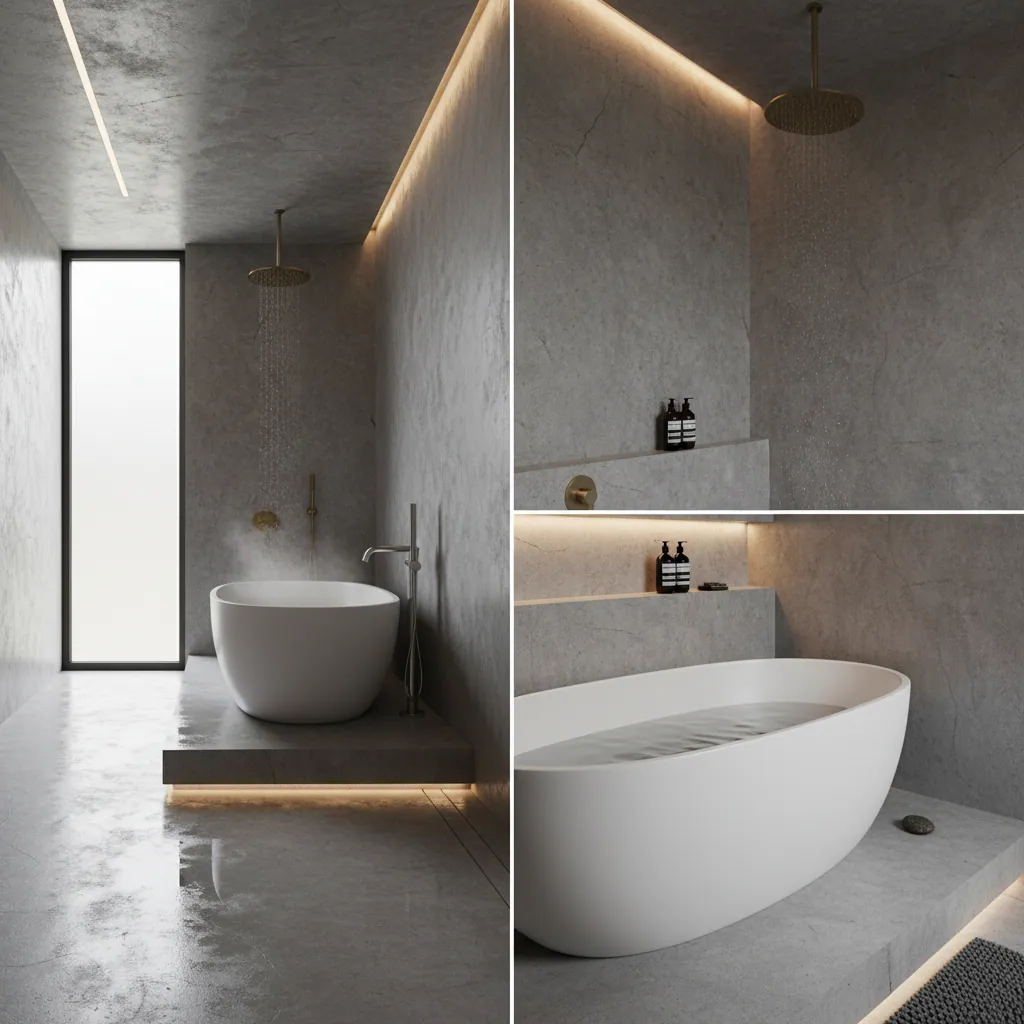
Wet room knowledge — cost breakdown
A wet room is a significant investment, and you deserve to know where the money goes before you commit. The short version: a wet room in Plymouth typically costs from around £5,545 to £10,810, with an average near £7,775. But an average is only so useful — what really matters is what drives your figure up or down, and why a wet room costs a little more than a standard bathroom. This guide breaks it down honestly: the range, the elements, labour versus materials, and how to get the most for your money.
What a wet room costs in Plymouth
A wet room in Plymouth typically runs from around £5,545 to £10,810, with an average close to £7,775. That is a wide range, and deliberately so — a compact wet room with a straightforward floor and mid-range finishes sits near the bottom, while a larger room with premium tiles, a big glass screen, underfloor heating and drainage that has to move sits near the top. Plymouth prices sit around 9% below the national average, which is simply the regional labour market working in your favour, and something we are transparent about rather than quiet on.
It is worth setting this next to a standard bathroom for context. A full bathroom installation in Plymouth typically runs £4,075 to £10,870, averaging around £6,340. A wet room usually costs a little more than an equivalent bathroom, and the reason is entirely in the floor: the tanking, the graded falls and the drainage are extra, skilled work that a standard bathroom with a shower tray simply does not need. You are paying for the hidden engineering that makes an open, level floor watertight — and that is exactly the part worth paying for. Our wider Plymouth bathroom cost guide puts all the services side by side.
Where the money actually goes
It helps to see a wet room as a set of elements rather than one lump sum. Roughly, this is where your budget is spent — and why:
- Labour is the biggest single share. A wet room is skilled, careful, multi-trade work — for a Plymouth bathroom, labour commonly runs in the region of £2,324 to £4,865, and a wet room’s extra floor work sits within that.
- The waterproofing and floor build-up. Tanking, the former or graded screed and the drainage are the wet-room-specific costs — the parts a standard bathroom doesn’t have.
- Tiles and the screen. Your choice of flooring and glass screen swings the price more than almost anything else you pick.
- Sanitaryware, shower and extras. The shower valve, toilet, basin, taps and any underfloor heating round out the figure to your taste and budget.

What drives your wet room price up or down
Two wet rooms of the same size can cost very different amounts. These are the factors that move the number most, so you can see where you have control:
Room size
More floor means more tanking, more tiles and more labour. But size isn’t proportional — the fixed cost of doing the floor properly means a small wet room doesn’t cost as little as you might hope, as our small wet room guide explains.
Floor type
A ground-floor concrete slab is the simplest and cheapest base. An upstairs timber floor needs a more careful build-up to carry the fall and stay rigid, which adds labour — see our timber floor guide.
How far the drainage moves
If the existing waste is well placed, drainage is straightforward. If it has to travel to reach the soil pipe, that’s extra work — and it’s one of the biggest hidden swings in a conversion.
Tiles and finishes
Tiles range enormously in price, and a wet room uses a lot of them across floor and walls. Large-format and natural stone cost more than standard porcelain; your choice here is one of the biggest levers you hold.
The glass screen
A frameless screen costs more than a framed one, and a large panel more than a small one. It’s a visible, worthwhile spend, but it’s a real line in the budget.
Heating and extras
Underfloor heating, a premium shower valve, a recessed niche, feature lighting — each adds to the total. Laid while the floor is open, underfloor heating is far cheaper than retrofitting it later.
Getting the most for your money
The single best piece of advice we give on cost is this: never save money on the parts you cannot see. The tanking, the falls and the drainage are where a wet room lives or dies, and skimping on them is a false economy that leads to the most expensive repair in the whole trade — lifting the floor to start again. Spend confidently on the hidden work and back it with a proper guarantee. Where you genuinely can flex the budget is on the visible finishes: tiles, the screen and the sanitaryware. A mid-range tile laid impeccably looks far better than an expensive one laid badly, and you can always choose a simpler screen or a standard shower valve without affecting how well the room works.
The other real saving is doing it once, properly. A wet room built right by an accountable team, to regulations, with a fixed written quote, costs less over its life than a cheap one that needs putting right — a lesson plenty of Plymouth homeowners have learned the hard way. A fixed quote also protects you from the mid-job “creep” that turns a tempting low price into an uncomfortable final bill. We price the whole job up front, so the number we agree is the number you pay.
Labour versus materials — and why the quote matters
People often want to split a wet room neatly into labour and materials, and while it varies job to job, labour is usually the larger share — for a Plymouth bathroom it commonly falls in the region of £2,324 to £4,865, and a wet room’s extra floor and waterproofing work sits within that. That is not a number to flinch at; it reflects that a wet room is days of skilled, careful, multi-trade work, most of it invisible in the finished room. The materials — tiles, screen, sanitaryware, membrane, drain — are where your own choices swing the total most.
This is exactly why a fixed written quote beats a day rate or a rough ballpark. A day rate quietly rewards a fitter for going slowly, and a ballpark leaves room for the number to climb once the floor is open. A proper fixed quote, given after a real survey of your actual floor and waste run, tells you the whole cost before a tool comes out — no surprises, no creep. It is the same no-surprise approach we bring to every wet room and renovation we take on.
Wet room or walk-in shower — which costs more?
A question we field constantly is whether to spend on a full wet room or a walk-in shower with a low-level tray. On cost, a walk-in shower usually comes in a little lower, because a slim tray sits on the existing floor and avoids the full tanking and graded-floor build-up a wet room needs. If budget is the deciding factor and you are happy with a very low tray and a screen, a walk-in shower is a sensible, cheaper route that still gives you an open, easy-access feel.
Where a wet room earns its extra cost is in the things a tray cannot match: a genuinely level, step-free floor with no lip at all, complete design freedom over where the drain and shower sit, and the most future-proof, accessible layout you can build. For many Plymouth homeowners — particularly those planning around mobility or wanting that seamless, tiled-throughout look — that is worth the difference. Neither is “better”; they answer slightly different briefs, and we are happy to price both so you can see the gap for your own room rather than deciding in the abstract.
What our fixed quote includes
A price is only meaningful if you know what sits behind it, so our fixed written quotes spell out the whole job rather than a headline figure with surprises underneath. That means the strip-out of the old room, the floor build-up and falls, the full tanking, the drainage, all the tiling, the sanitaryware and shower, the ventilation, any electrical work certified to Part P, and the finish and clean at the end. The compliant electrics, the properly rated extractor and the recognised waterproofing standard are included as standard — not optional extras you have to know to ask for.
What we will always flag up front are the genuine unknowns that only reveal themselves once a floor is open — the occasional hidden rot or an awkward waste run in an older Plymouth property. Rather than bury a vague contingency in the number, we talk these through at the survey so you understand any variables before we start. That honesty is the whole point of a fixed quote from an accountable local team: the number we agree is the number you pay, and anything that could sensibly change it is a conversation, never a nasty letter at the end. It is the same no-surprise promise across every wet room and bathroom we fit.
Wet room cost FAQs
How much does a wet room cost in Plymouth?
A wet room in Plymouth typically costs from around £5,545 to £10,810, with an average near £7,775. Where your project falls depends on the room size, the floor type, how far the drainage has to move, and the tiles and screen you choose. Plymouth prices sit about 9% below the national average, and we give a fixed written quote after a proper survey so there are no surprises.
Why does a wet room cost more than a normal bathroom?
Because of the floor. A wet room needs a fully tanked, graded, level-access floor with the right drainage — skilled, hidden work that a standard bathroom with a shower tray simply doesn’t require. A full Plymouth bathroom averages around £6,340 while a wet room averages nearer £7,775, and that difference is essentially the cost of the waterproofing and falls that make an open floor watertight.
What’s the biggest cost in a wet room?
Labour is usually the single biggest share — for a Plymouth bathroom it commonly runs in the region of £2,324 to £4,865, reflecting days of skilled, multi-trade work. After that, your choice of tiles and glass screen swings the total most, since a wet room uses a lot of tiling across floor and walls. The tanking and drainage are the wet-room-specific costs a standard bathroom doesn’t carry.
Does a small wet room cost much less?
Less, but not proportionally. The tanking, drainage and graded floor have to be built whatever the size, and that’s a fixed chunk of the work, so a small wet room doesn’t cost as little as its square metres suggest. Fewer tiles, a smaller screen and less sanitaryware do lower the total, placing a compact wet room toward the lower end of the range that starts around £5,545.
Where can I save money on a wet room without regretting it?
Save on the visible finishes, never on the hidden work. Tiles, the glass screen and the sanitaryware can all be chosen at mid-range without affecting how well the room works — a mid-range tile laid well beats a costly one laid badly. But the tanking, falls and drainage are where a wet room lives or dies, and skimping there leads to the most expensive repair in the trade. Spend confidently on what you can’t see.
Why do you quote a fixed price instead of a day rate?
Because a fixed written quote protects you. A day rate quietly rewards slow work, and a rough ballpark leaves room for the price to climb once the floor is open. After surveying your actual floor and waste run, we price the whole job up front, so the number we agree is the number you pay — no creep, no surprises. It’s the no-surprise approach we bring to every job.
Get a real number for your wet room
Averages and ranges are a useful starting point, but the only figure that truly matters is the one for your room. Once we have seen your floor, your waste run and the finishes you like, we can give you a fixed written quote for the whole job — no creep, no surprises. Read this alongside our guides to converting a bathroom to a wet room and maintenance and lifespan, see the full wet room installation service, and compare across all our work on the Plymouth bathroom cost guide.
Proud of every bathroom we fit
Get a fixed price for your wet room
No ballparks, no creep — just one clear written quote after we’ve seen your actual room. Tell us what you’re planning and we’ll break down exactly what it costs and why, at honest Plymouth prices. Proud of every bathroom we fit, and upfront about every one.