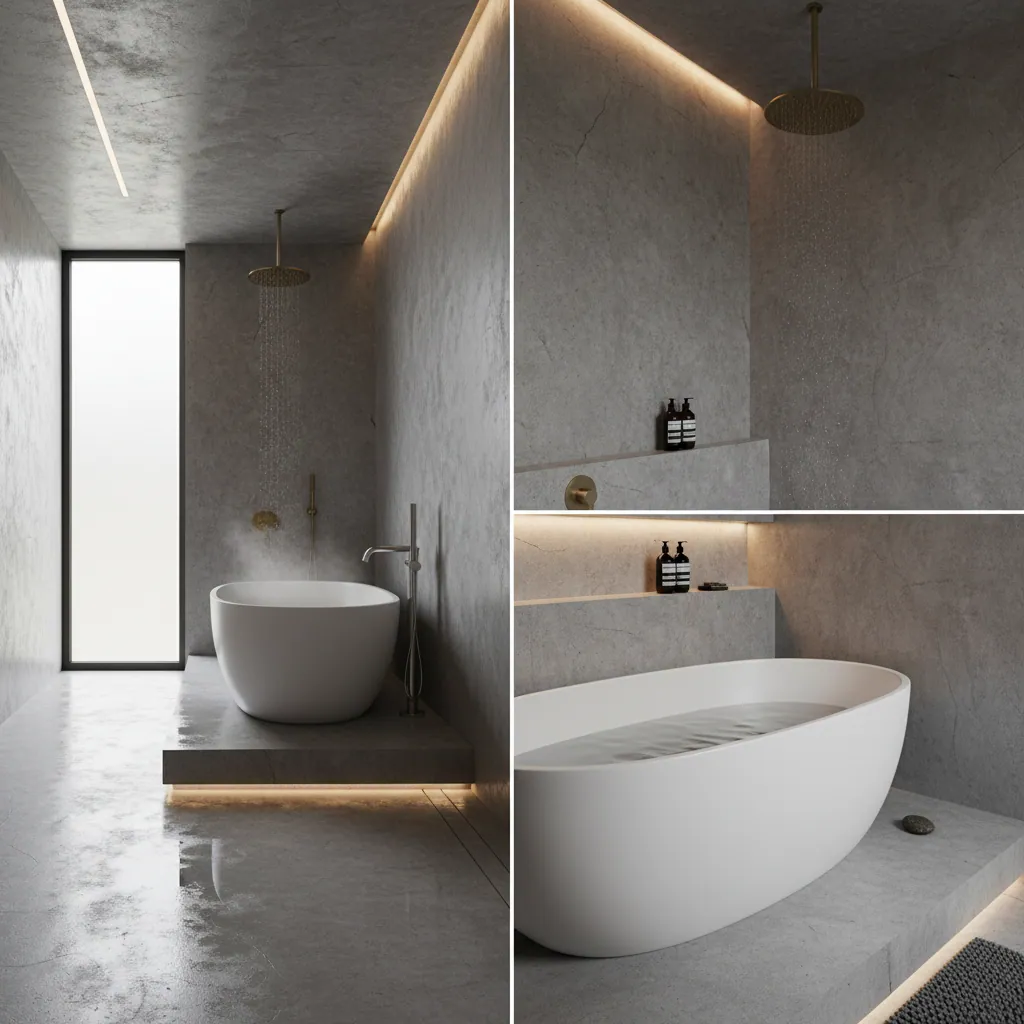
Quick answer
Converting an existing bathroom into a wet room almost never needs planning permission — it’s an internal alteration. But it absolutely must meet the Building Regulations on waterproofing (tanking), drainage falls, ventilation and electrics. Done properly, that’s what stops a wet room leaking into the rooms below.
Planning permission: almost never needed
Like any internal bathroom change, turning your existing bathroom into a wet room is normally permitted development and doesn’t require planning permission. You’re not altering the footprint of the house or its external appearance — you’re changing how the room works inside. The same exceptions apply as for any bathroom: a listed building will usually need listed building consent, and a conservation area can bring restrictions if the work affects the exterior (for example a new external vent).
So for the vast majority of Plymouth homes — a 1960s semi in Plymstock, a terrace in Peverell — there’s no planning hurdle to converting to a wet room. The real attention goes on the Building Regs and, above all, the waterproofing.
The Building Regs that always apply to a wet room
A wet room demands more care than a standard bathroom because the whole floor — and often the lower walls — get wet. The regulations and good-practice standards that matter most are:
Waterproofing (tanking)
The floor and wet walls must be fully tanked with a waterproof membrane before tiling. This is the single most important stage — skip or rush it and water finds its way into the structure. The membrane must be given time to cure.
Drainage & falls (Part H)
The floor is laid to a gentle fall so water runs to the drain rather than pooling. Getting the gradient right across the whole floor is skilled work and central to a wet room that drains cleanly.
Ventilation (Part F)
Wet rooms produce a lot of moisture, so adequate mechanical extraction is essential to keep the room — and the rest of the house — free of damp.
Electrics (Part P)
Lighting, fan, underfloor heating and any controls are wired and certified by a qualified electrician, respecting the bathroom zones.
Standards and guidance evolve. Confirm current requirements with Plymouth City Council building control or a qualified professional before starting.
The thing that really matters: getting it watertight
You don’t need a planning officer to sign off a wet room, but you absolutely need a fitter who tanks it properly. A wet room that leaks is a nightmare — water tracking under tiles, staining ceilings below, and a repair that means ripping the whole floor out. The difference between a wet room that lasts 20 years and one that fails in two comes down to the unseen work: the membrane, the falls, the detailing around the drain and the joints.
That’s why we treat tanking as a non-negotiable stage and never rush it. Read more in our answer on what tanking is and why a wet room needs it.

Tanking and floor falls are the hidden work that decides whether a wet room stays watertight for decades.
One thing to check upstairs: the floor
If your wet room is on an upper floor — which is common — the build-up of the waterproofing and falls needs a suitable, rigid floor structure. Timber floors can be done, but they need the right preparation so there’s no movement that could crack the membrane or tiles. We’ll assess your floor as part of the survey and tell you honestly what it needs. Our answer on wet rooms upstairs goes into more detail.
For the full picture, see our wet room installation service, the related wet room building regs answer, and our Plymouth cost guide for budgets (a wet room typically runs £5,545–£10,810).
Frequently asked
Do I need planning permission to convert a bathroom to a wet room?
Almost never — it’s an internal alteration and counts as permitted development. Listed buildings and conservation areas are the usual exceptions to check. Building Regs always apply to the work.
Do I need to tell building control?
A like-for-like conversion is largely self-certified through registered trades, but new drainage or structural changes can be notifiable. Confirm your specific job with Plymouth City Council.
Is a wet room more expensive than a standard bathroom?
Often slightly, mainly because of the tanking and floor preparation. In Plymouth a wet room typically costs £5,545–£10,810. See our cost guide.
Watertight, guaranteed
Convert your bathroom into a wet room — properly
We tank it right, lay the falls right, and certify the electrics — so your new wet room stays leak-free for the long haul.