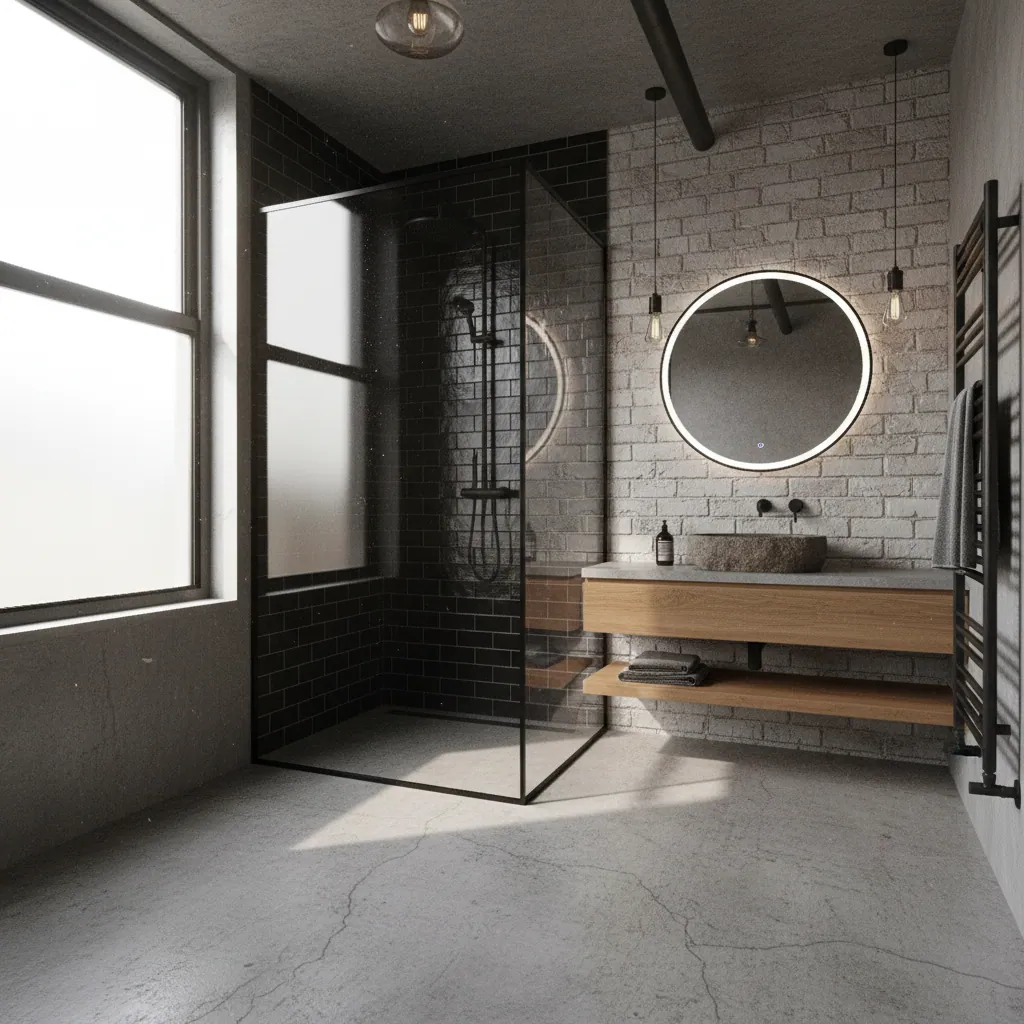
Quick answer
A walk-in shower is open-plan — a single fixed glass screen and no door — while a shower enclosure is fully boxed in with sliding or hinged doors. A walk-in feels more spacious, is easier to clean and easier to step into; an enclosure contains steam and splash more tightly and suits smaller or corner spaces. Both can use a tray or a tiled floor.
The core difference
It really comes down to one thing: doors. A shower enclosure is a self-contained box — glass panels on the open sides and a door (sliding, hinged, bi-fold or pivot) that you close to seal yourself in. A walk-in shower drops the door entirely. Instead you get one fixed pane of glass, generous enough to block the spray, and an open entry you simply step through. Everything else — the tray or tiled floor, the valve, the head — can be the same on either.
That single change ripples through everything else: how the room feels, how much you clean, how easy it is to step in, and how tightly the steam and splash are contained. Neither is better in the abstract; the right one depends on your room and what you care about most. Our walk-in showers service covers the open-plan option in full.
Walk-in shower
- Open, airy, makes a room feel bigger
- Easy step-free or low-step access
- Less to clean — no doors, runners or seals
- Modern, brochure look
Trade-off: steam spreads into the room (needs a good extractor), and it needs enough length to control splash without a door.
Shower enclosure
- Contains steam and splash tightly
- Great for small or corner spaces
- Keeps heat in for a warmer shower
- Works in the tightest footprints
Trade-off: doors, runners and seals to clean, a step over the tray, and it can make a small room feel more boxed-in.
Which suits your room?
For most of the Plymouth renovations we do — a tired family bathroom in Plympton or Plymstock getting a modern refresh — a walk-in shower is the popular pick. It feels generous, it’s kinder to clean, and it’s the look people picture when they imagine a smart new bathroom. It’s also the natural choice for accessibility, since a level-access walk-in removes the step entirely (see our walk-in showers for the elderly page).
A shower enclosure earns its place where space is genuinely tight, in a corner installation, or where you want to keep every scrap of heat and steam contained — a chilly north-facing en-suite, say. It works in footprints too small for a comfortable walk-in. Cost is broadly similar: a walk-in runs £2,500–£6,500 fitted in Plymouth, and a quality enclosure lands in a comparable range once you factor in the glass. If you want to remove the step and the screen, that’s a wet room — and our wet room vs walk-in shower guide compares those two.
Common questions
Is a walk-in shower better than an enclosure?
Not universally — a walk-in is more open and easier to clean, an enclosure contains steam and suits tight spaces. The best choice depends on your room size, layout and whether step-free access matters.
Which keeps the bathroom warmer?
An enclosure, because it traps heat and steam inside. A walk-in lets steam spread, so we always pair one with a good extractor and recommend underfloor heating if warmth is a concern.
Which is easier to clean?
A walk-in — there are no doors, runners or seals to scrub. Our cleaning guide has the detail.
A worked example: two real Plymouth rooms
The choice makes most sense with actual rooms in front of you. Picture a decent-sized family bathroom in Plympton, 2.2m by 2m, being refreshed. There’s length to spare, so a 1400mm walk-in with a single fixed screen fits easily, feels open and airy, and gives that brochure look — the popular pick, and simple to keep clean. Steam is managed with a good extractor, and the floor stays dry because the screen is long enough to block the spray.
Now picture a compact en-suite in a Woolwell new-build, maybe 1.6m by 1.4m, tucked into a corner. Here a walk-in would be all screen and little room, so a corner enclosure — an 800 × 800mm or 900 × 900mm quadrant with a sliding door — makes far better use of the footprint, contains the steam in a small space, and keeps the warmth in. Same budget bracket, different room, different answer.
Notice neither decision was about which product is better in the abstract — it was about the room. That’s the honest way to choose, and it’s how we’d steer you rather than pushing whichever we happen to stock.
How to decide between the two
When we talk it through on site, it usually comes down to a handful of honest questions.
- How much floor length have you got? Enough for a long fixed screen points to a walk-in; a tight footprint suits an enclosure.
- Is step-free access a priority, now or later? That leans towards a walk-in — or a fully level wet room.
- How warm is the room? A chilly north-facing en-suite may prefer an enclosure’s trapped heat.
- How much cleaning are you happy to do? A walk-in has no doors, runners or seals to scrub.
- Wow factor or maximum practicality? Open and generous, or tightly contained and efficient.
Which adds more value when you sell?
Both read as a modern, well-kept bathroom to a buyer, which is what actually moves a sale in Plymouth. A walk-in tends to photograph better and signals an updated home, while a neat enclosure in a small second bathroom is simply sensible. Neither will make or break a valuation on its own — a tidy, quality finish matters far more than the format. If you’re budgeting a wider update, our bathroom cost guide sets out where the money goes, and our FAQs cover the common worries.
The right shower for your room
Walk-in or enclosure — let’s work it out
We’ll look at your space and how you live, recommend the better fit honestly, and give you a fixed written quote.