A rainfall shower is the single most requested upgrade we hear about on a first visit, whether it is a Victorian terrace in Peverell or a newer semi out towards Derriford. People have felt one in a hotel or a friend’s new build and they want that same broad, soft drench at home. The good news is that it is very achievable in most Plymouth bathrooms. The honest caveat is that a big drencher head only feels right if the water behind it is right, and that is where a bit of plain-spoken planning saves a lot of disappointment. This guide walks through the heads, the dual-outlet options, the diverters, and, crucially, the water pressure realities of real Plymouth homes.
We will keep it practical. By the end you will know the difference between a fixed rain head and a proper dual-head setup, whether a ceiling or wall mount suits your room, how many outlets your valve needs to control, and, most importantly, whether your supply can drive it all without turning into a dribble. If you are still weighing up the whole showering format, our overview of walk-in showers and bathing options is a good companion to this page.
What a rainfall shower actually is
A rainfall or drencher head is a large, flat shower head, usually 200 to 400mm across, that sits well above you and releases water straight down in a wide, gentle curtain rather than a narrow jet. Because the water falls vertically over a big area, it feels soft and enveloping, more like standing in warm summer rain than being blasted by a nozzle. That is the appeal, and it is a genuine one. It is also the reason a rain head behaves very differently from an old-fashioned shower on the plumbing side, because it wants volume of water more than it wants force.
Broad, even coverage
A wide head wets your head, shoulders and back in one go, so there is far less shuffling under the spray to rinse off. It is a calm, unhurried way to shower.
A softer feel
Water falls with gravity rather than being forced through tiny holes, so it lands gently. Many people find it far kinder on the skin and scalp than a pin-sharp jet.
A design centrepiece
A ceiling drencher or a slim wall arm reads as a deliberate feature. In a well-finished walk-in it becomes the thing everyone notices first.
The trade-off is baked into the physics. Because the water is not being pressurised through a small aperture, a rain head relies on a healthy flow arriving at the valve in the first place. Pair one with a tired, low-pressure supply and instead of rain you get a limp, uneven drizzle round the edges. That is why we always talk about the supply before we talk about the head, and it is why the second half of this guide matters as much as the first. If mains-pressure showering is new territory for you, our guide to electric versus mixer showers sets out how each type draws its water.
Single rain head or dual-head? The options explained
Once you have decided you want that drenching feel, the next question is how many ways the water comes out. This is where the choice really opens up, and it is worth understanding before you fall in love with a picture, because the number of outlets decides the valve you need behind the wall.
| Setup | What you get | Best for |
|---|---|---|
| Single fixed rain head | One drencher, one control | Clean, simple showers; the classic look |
| Rain head plus handset | Drencher above, handset on a rail or wall | Family bathrooms; rinsing, cleaning, hair-washing |
| Rain head plus body sprays | Overhead drench plus side jets | Larger walk-ins where space and flow allow |
| Twin-head bar | Two heads on one riser or wall bar | Shared showers and easy retrofits |
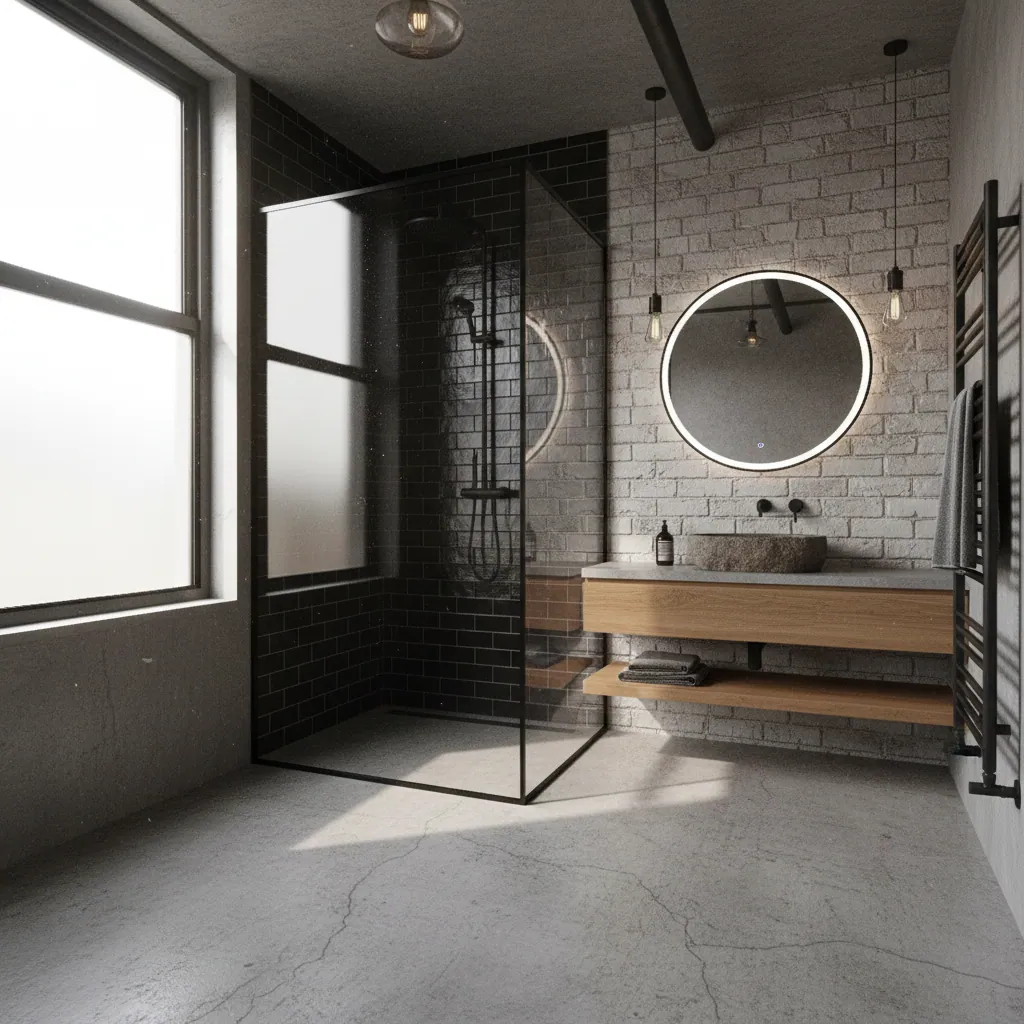
By some distance the most popular of these in Plymouth homes is the dual outlet: a fixed rain head overhead for the drenching feel, plus a separate handset on a riser rail or a wall bracket for everything the drencher is bad at. And a drencher genuinely is bad at some things, because you cannot easily aim a fixed head. The handset is what you reach for to rinse conditioner from long hair, wash a child, rinse the tray down after, or clean the enclosure. In practice most families use the handset far more than they expected to, which is exactly why we so often steer people towards a dual-head rather than a lone rain head.
How the diverter shares the water
With two or more outlets you need something to send the water to the right one, and that job falls to a diverter. On simpler setups the diverter is a small lever or knob that switches flow from the rain head to the handset, one at a time. On a more integrated dual-control valve you can often run both together or independently, and set the temperature separately from the flow. The key point for planning is honest and worth repeating: running two outlets at once splits your available water between them, so a supply that drives a single head beautifully may struggle to feed both a drencher and a handset simultaneously. Most people are perfectly happy switching between the two, which keeps the full flow behind whichever head is running.
Ceiling-mounted or wall-mounted?
Where the rain head lives changes both the look and the practicality, and it is a decision best made early because a ceiling feed means pipework in the void above. There is no single right answer; it depends on your ceiling, your room and how you like to shower.
Ceiling-mounted
The head drops straight down from the ceiling on a short stem, so the water falls perfectly vertically over the centre of the zone. It looks clean and architectural, with no arm on show, and it is the truest rainfall feel. It does need pipework run in the ceiling void and a solid fixing, which is straightforward in most Plymouth homes but worth designing in from the start rather than retrofitting later.
Wall-mounted
The head sits on an arm that comes out of the wall, angled so the water still falls close to vertical. It is simpler to plumb because the feed runs up the wall behind the tiling, and it is the easier choice when a solid ceiling fixing is awkward. You keep almost all of the drenching feel, and it pairs neatly with a handset on the same wall.
In older Plymouth properties around Stoke and Mannamead, where ceilings can be lath and plaster or hide unhelpful joists, a wall-mounted head is often the pragmatic pick. In newer builds and loft conversions with easy access above, a ceiling drencher is very achievable and looks superb. We will always check what is above the ceiling before we promise you a ceiling mount, because there is nothing worse than committing to a look the structure will not comfortably allow. However you mount it, the head needs to sit high enough to clear the tallest user with room to spare, which ties back to the head-height planning we cover in our guide to walk-in shower sizes and dimensions.
The part that matters most: water pressure and flow
Here is the honest heart of the matter, and the reason we lead so many rainfall conversations with plumbing rather than styling. A rain head lives or dies on flow. Because the water is not squeezed through a fine jet, it needs a good volume arriving at a decent pressure to fill that wide head and fall evenly. Get it right and it is glorious. Get it wrong and the outer ring of the head barely trickles while the centre dribbles, which is a genuinely disappointing thing to have spent money on.
Plymouth’s housing stock is a real mix, and your system type is the single biggest factor. Broadly, we see three situations, and each one points to a different answer for whether a drencher will feel right straight away or needs help first.
If your home runs on a combination boiler or an unvented (pressurised) cylinder, you are usually in good shape. Both deliver hot water at or near mains pressure, which is exactly what a drencher wants, and many of the newer semis around Plympton and the modern developments near Derriford fall into this bracket. A single rain head will typically feel great with no extra kit at all.
The situation that needs the most care is the traditional gravity-fed system, which is still common in Plymouth’s older terraces and unmodernised homes: a cold tank in the loft and a hot cylinder in the airing cupboard. Because the pressure comes only from the height of the tank above the shower, the flow is often gentle, and a wide rain head can leave it looking underwhelmed. That does not mean you cannot have one; it means we plan for it. In most of these homes the answer is a shower pump, which boosts the flow to give the drencher the volume it needs. In others, the right long-term move is to change the system to mains-pressure, often as part of a wider project. If you are unsure which camp you are in, it is exactly the kind of thing we check on a free survey, and our page on thermostatic mixer shower valves explains how the valve itself is matched to your pressure so the temperature stays rock steady.
Reading a flow rate
Shower valves and heads are usually rated for a minimum flow, given in litres per minute or in bar of pressure. As a rough guide, a large drencher wants noticeably more flow than a compact head, and running two outlets at once roughly doubles the demand. When we specify a rainfall setup we match the head, the valve and the supply as one system rather than picking a pretty head and hoping. That is the difference between a shower that performs on day one and one that gets quietly resented. It is also why we would rather talk you out of an oversized head on a modest supply than sell you a disappointment.
Pumps, valves and getting the whole system right
If a pump is the answer for your home, it is a well-trodden path and nothing to be nervous about. A shower pump sits on the hot and cold feeds and lifts the flow to a level that makes a drencher sing, turning a gentle gravity trickle into a proper, even fall. Sizing the pump to the head and the number of outlets is the skilled part, and it is one we handle as a matter of course rather than leaving you to guess.
- Match the valve to the outlets: a single head needs a single-outlet valve, a dual-head needs a two-outlet valve with a diverter, and more sprays mean more control.
- Size any pump to the total demand, not just one head, so running the drencher and handset together still holds up if you want that option.
- Use a thermostatic valve so the temperature stays steady when a tap runs or a toilet flushes elsewhere in the house.
- Keep pipe runs generous: a wide-bore feed to the valve helps a rain head far more than any clever nozzle ever will.
- Plan the fixing and pipework before tiling, especially for a ceiling mount, so nothing is bodged in at the end.
All of this is ordinary, everyday work for us, and it is the invisible half of a rainfall shower that makes the visible half feel expensive in the best way. A drencher fed properly through a well-sized valve and, where needed, a good pump is a completely different experience from the same head starved of water. We would always rather spend an extra hour on the supply than let a beautiful head underperform. If your project is a full room rather than just the shower, it is worth reading this alongside our guide to walk-in shower screens and enclosures, since the glazing you choose changes how open the finished drenching zone feels.
Who a rainfall or dual-head shower suits, and the cost
A rainfall shower suits almost anyone who wants a calmer, more generous shower and has, or can be given, the flow to drive it. It is especially lovely in a walk-in, where the open zone lets the wide fall of water do its thing without a cramped enclosure fighting it. A dual-head setup earns its keep hardest in busy family bathrooms, where the handset does the practical heavy lifting while the drencher provides the daily treat. Couples who like different things from a shower also tend to love a dual outlet, because one person can have the drench and the other the aimable handset without compromise.
On budget, it is reassuring that a rainfall or dual-head upgrade is usually a modest slice of the overall shower cost rather than a wild extravagance. Plymouth fitting runs around nine per cent below the UK average, and a typical walk-in shower here lands somewhere between £2,500 and £6,500 with an install of three to six working days. A rain head and dual-outlet valve nudge the fittings cost up rather than transforming it; the bigger variable is usually whether you need a pump or a system change to feed it, which is exactly why we survey before we quote. If the shower is part of a wider refit, a full bathroom in Plymouth typically runs £4,075 to £10,870, averaging around £6,340 over seven to ten working days. For the full picture, our Plymouth bathroom cost guide breaks the numbers down, and if you are planning a top-to-bottom job our full bathroom installation service is where a rainfall shower usually lives most happily. When you are ready to talk specifics, you can always explore the walk-in shower range or simply get in touch for a proper look at your supply.
Frequently asked questions
Do I need high water pressure for a rainfall shower?
A rain head needs good flow more than raw force, because the water falls over a wide area rather than being forced through a jet. Combi and unvented systems usually drive one well straight away. Older gravity-fed homes with a loft tank are often too gentle on their own and typically need a shower pump, or a change to mains-pressure, to make the drencher feel right.
What is the difference between a rain head and a dual-head shower?
A single rain head gives you one fixed drencher overhead. A dual-head shower adds a second outlet, usually a handset on a riser rail or wall bracket, controlled by a diverter. The handset is what you reach for to rinse hair, wash a child or clean the tray, which is why most Plymouth families prefer a dual-head over a lone rain head.
Can I have a rainfall shower on a low-pressure Plymouth home?
Usually yes, with the right help. Many older terraces around Peverell and Stoke run on low-pressure gravity systems, and a wide drencher can look underwhelmed on those unaided. Fitting a correctly sized shower pump, or moving to a mains-pressure supply, gives the head the volume it needs. We check your system on a free survey before recommending anything.
Should the rain head go on the ceiling or the wall?
Both work well. A ceiling mount gives the truest vertical fall and the cleanest look, but needs pipework and a solid fixing in the ceiling void. A wall mount comes out on an arm, is simpler to plumb, and suits older homes where a ceiling fixing is awkward. We check what is above the ceiling before promising a ceiling mount.
Can I run the rain head and handset at the same time?
It depends on your supply. Running two outlets at once splits the available water between them, so a system that drives one head beautifully may not fully feed both together. A dual-control valve or a suitably sized pump can allow it, but most people are happy switching between the two with a diverter, which keeps the full flow behind whichever head is running.
Does a rainfall shower cost a lot more to fit?
The head and dual-outlet valve add to the fittings rather than transforming the overall price. A typical Plymouth walk-in shower runs £2,500 to £6,500 over three to six working days. The bigger cost variable is whether your home needs a pump or a system change to feed the drencher, which is exactly why we survey your supply before we quote.
Let us get the water right first
Talk through a rainfall shower for your Plymouth home
The secret to a drencher that actually drenches is matching the head to your supply. We will check your pressure and system, tell you plainly whether you need a pump, and show you the dual-head options that suit the way you shower, with no pressure and no jargon.