
Quick answer
No, a wet room doesn’t need a screen — the whole floor is waterproof — but in most homes we’d strongly recommend a fixed glass panel. It controls overspray, keeps the toilet and towels dry, holds the shower’s warmth in, and reduces how much of the room you have to mop. The main exception is full wheelchair access, where an open layout matters more.
What a screen actually does
A wet room screen is usually a single fixed pane of toughened glass — no door, no track, no enclosure. It stands beside the shower and does several useful jobs at once, which is why the great majority of wet rooms we fit in Plymouth have one. It’s the smallest change with the biggest impact on how the room works day to day.
Controls overspray
It catches the bulk of the spray before it reaches the rest of the room — the number-one fix for the classic “everything gets wet” complaint. More on keeping a wet room’s dry zone dry.
Keeps the dry zone dry
Toilet, basin, towels and roll stay usable. You’re not reaching through spray or drying everything off after each shower.
Holds heat in
Glass traps the shower’s warmth and steam in the wet zone while you’re in it, so the room feels warmer and less draughty.
Less to mop
With water contained, far less of the floor gets wet, so there’s less to wipe down and the room dries faster — without losing the open, step-free feel.
When you might skip the screen
There are genuine reasons to go fully open, and they’re nearly always about access. A screen is optional, so the decision comes down to who’s using the room and how:
- Full wheelchair access — an unobstructed entry matters more than splash control, so an open layout often wins.
- Assisted showering — a carer needs room to move, and a screen can get in the way.
- Very tight rooms — occasionally there isn’t space for a panel without it feeling cramped, though usually a half-height or shorter panel still helps.
- A deliberate open aesthetic — some clients want the pure, panel-free look and are happy to mop.
In these cases we plan the layout, falls and drain position to control water as much as possible without a screen — and we’ll always be straight with you that an open wet room means a wetter floor and more wiping down. For accessible setups, our accessible bathrooms page covers the trade-offs.
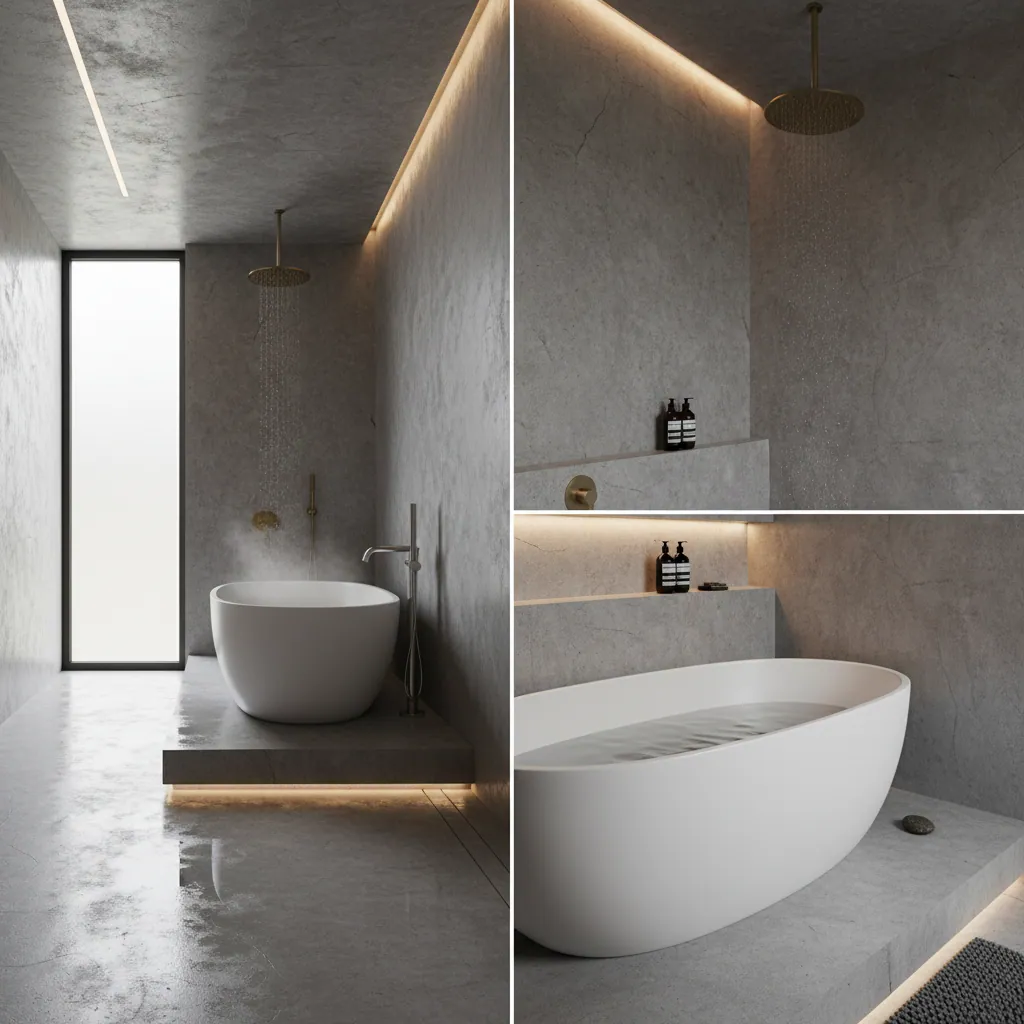
For full access, an open wet room with no screen can be the right call — the design then focuses on falls and drainage to manage the water.
Types of screen and what they add to the cost
Most wet room screens are a frameless or minimal-frame fixed panel in toughened glass — clean, modern and easy to keep clear. You can choose a single straight panel, a panel with a return, or a walk-in arrangement with a gap to step through. Some clients add a hinged “flipper” panel for extra splash control in tight spots. We’ll match the screen to the room and how you shower.
A screen is a modest part of the overall budget. Across Plymouth, wet rooms run £5,545–£10,810 (average around £7,775), and the glass is a small line within that — we set it all out on our wet room cost page. If you’re weighing a fully open wet room against a more contained shower, our wet room vs walk-in shower guide compares both, and you can see our approach on the wet room installation hub. To keep that glass looking clear, an easy-clean coating is well worth specifying.
Common questions
Can you have a wet room with no screen at all?
Yes — the room is waterproof throughout, so a screen isn’t required. It’s common for full-access wet rooms. Just expect more of the floor to get wet and a bit more wiping down without one.
Does a wet room screen need a door?
No. Most wet room screens are a fixed panel with an open walk-in gap — that’s the whole point of the level-access, no-enclosure look. A door would defeat the step-free benefit.
How do I stop the screen going cloudy?
Specify an easy-clean coating, squeegee after showering and wipe occasionally with a glass cleaner. Limescale is the usual culprit, so quick drying and the coating make a real difference.
Screen or open — your call
Get advice on your wet room layout
We’ll recommend whether a screen suits your room and how you use it, then give you a fixed written quote either way.