Renovate or replace — an honest guide
It is one of the first questions every homeowner asks: do we tidy up what we have, or take the whole thing out and start again? The honest answer is that it depends entirely on the condition of your room — and the fastest way to waste money on a bathroom is to get this call wrong in either direction. Rip out things that were perfectly sound and you have paid for work you did not need. Keep things that were quietly failing and you will be back inside a year or two. This guide sets out how we help Plymouth homeowners decide, as part of a considered bathroom renovation.
What each option actually means
People use these words loosely, so it is worth pinning them down, because the difference shapes the budget, the timeline and the mess. In plain terms there are three levels, and “renovation” can mean any of them.
Refresh
The bones of the room stay. You update the surfaces and fittings — a new suite or shower in the existing positions, fresh tiling, flooring, lighting and extraction — with the plumbing left where it is. Cheaper, quicker, less mess.
Full replacement
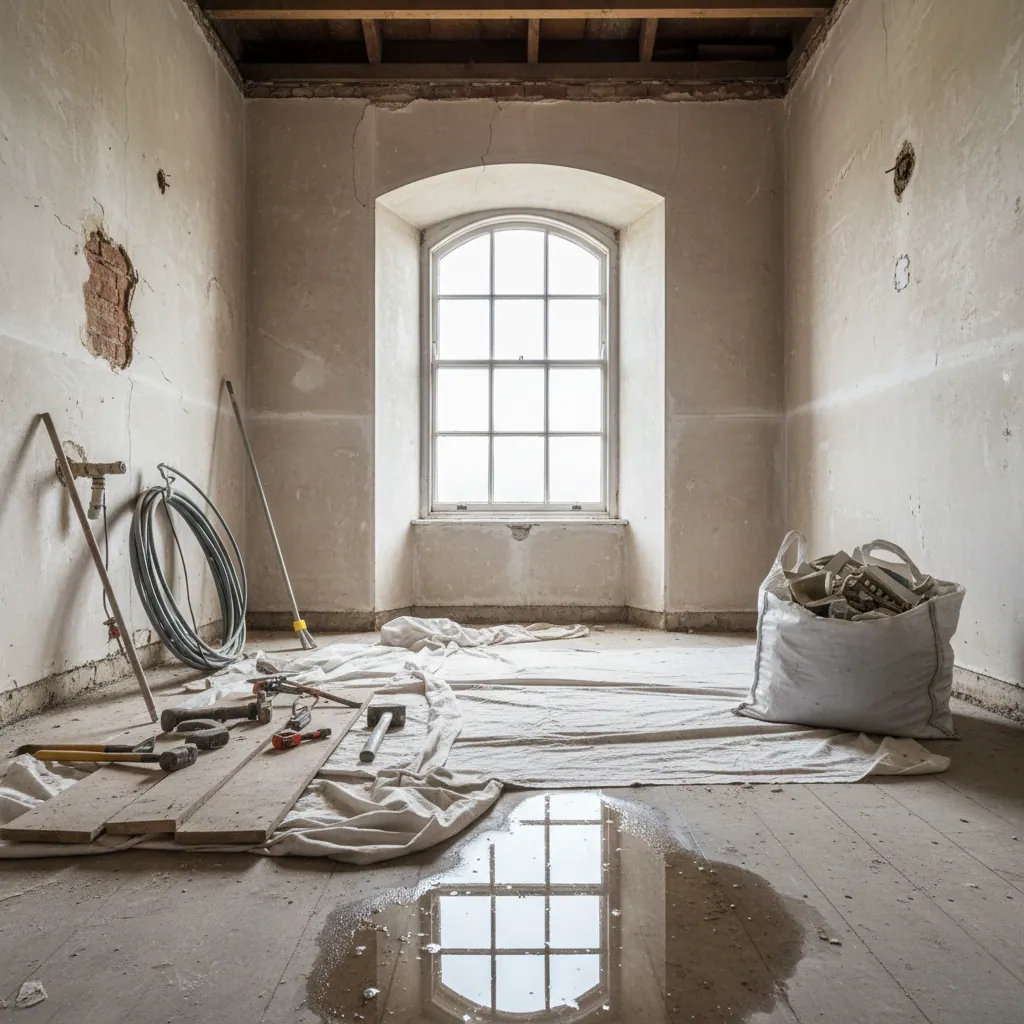
The room is stripped back to bare walls and floor and rebuilt from there. Everything is renewed, and anything hidden is put right before the room goes back together. More cost, more time, but the only way to deal with trouble behind the surfaces.
Remodel
A replacement that also changes the layout — moving the bath, the basin, or switching format from a bath to a walk-in shower. The most involved option, and the right one when the layout itself is the problem.
The question, then, is not “how much can we change?” It is “what is actually wrong, and what is the least disruptive way to put it right well?” Answer that honestly and the right level of work chooses itself.
When a refresh is the smart choice
If your room passes a few basic tests, keeping its bones and updating the rest is usually the better value. A refresh gives you a noticeably newer bathroom without the cost and upheaval of going back to brick, and there is no virtue in tearing out a sound floor just to prove a point.
A refresh makes sense when…
- The layout works and you are happy where everything sits.
- The suite is sound but dated — it is the tiling, flooring and tired sealant dragging the room down.
- There is no sign of leaks, damp, rot or a soft floor.
- The pipework is in good condition and where you want it.
- You want a fresh, modern room without the mess of a full strip-out.
The saving comes from what you keep. A good bath in solid condition, a sound and level floor, well-placed plumbing and even decent neutral tiling can all stay while everything else is renewed. For ideas on getting the biggest lift from the least spend, see renovating on a budget, and for the cosmetic side, updating a dated bathroom.

When replacing is the right call
Sometimes a refresh is a false economy, and no amount of new tiling will fix what is behind the old. The signs are usually there once you know what to look for — and ignoring them only defers the real cost, with interest.
A full replacement makes sense when…
- The layout fights you daily — the door catches the basin, the bath is in the wrong place, there is wasted dead space.
- There is hidden trouble: blown plaster, perished pipework, a soft or bouncy floor, or damp behind the tiles.
- You are switching format — bath to walk-in shower, or bathroom to wet room.
- You are renovating the rest of the house and want the bathroom to match the standard.
- You keep patching the same faults and they keep returning.
The warning signs of hidden trouble
Some faults are cosmetic; others are the visible edge of something bigger. Treat these as reasons to strip back and look properly rather than tile over:
- A spongy, bouncy or creaking floor.
- A persistent musty or damp smell.
- Tiles that sound hollow or drum loose when tapped.
- Blown, bulging or crumbling plaster.
- Repeated leaks you keep re-sealing.
Where these appear, our guides to common bathroom repairs and dealing with leaks explain what is likely going on beneath the surface.
Weighing up cost, time and disruption
Money is usually the deciding factor, so it helps to see the two options side by side. A refresh keeps costs and disruption down by leaving the structure and plumbing alone. A full replacement costs more and takes longer, but it is the only route that lets you deal with what is behind the walls once and properly.
| Option | Typical Plymouth cost | Time on site | Best when… |
|---|---|---|---|
| Refresh | from ~£4,075 | A few days to a week | The room is sound and the layout works. |
| Full replacement | ~£5,500–£7,500 | 7–10 working days | There is hidden damage to put right. |
| Remodel | up to ~£10,870 | 10 days or a little more | The layout itself needs changing. |
Plymouth fitting costs run roughly 9% below the UK average, so these figures sit a touch under what you would pay up-country. For the full picture, our cost of a bathroom in Plymouth page breaks the numbers down.
What it means for the value of your home
A well-finished bathroom is one of the more reliable improvements for both saleability and value, because buyers notice a tired bathroom immediately and mentally deduct the cost of sorting it. But the value comes from the quality and condition of the finished room, not from how much was torn out — a beautifully finished bathroom renovation can add as much appeal as a full rebuild.
The one thing that does move the needle is hidden damage. Buyers and their surveyors spot damp and soft floors, and those findings knock money off or scare buyers away. So if the honest assessment says there is trouble behind the tiles, putting it right properly is not just good for you living there — it protects the sale later, too. Switching a bath for a walk-in shower is also a popular move with buyers, provided a family home keeps at least one bath.
Our advice, in the end, is always the same: get the room surveyed first. Half the time a refresh is all it needs and we will happily tell you so. The other half, we find something that means a full replacement is the only way to do the job once and do it right. Either way, you decide on facts and a fixed written quote — not guesswork.
The hybrid: renovate most, replace the problem
The renovate-or-replace question is rarely all-or-nothing in practice. Some of the best-value jobs we do are a hybrid — a refresh across most of the room, with a full strip-back of the one area that has trouble behind it. If the layout works and the room is generally sound, but the shower wall has been leaking and the plaster has blown, there is no sense stripping the whole bathroom. We open up and rebuild the wet wall properly, and refresh the rest.
This is where a good survey earns its keep, because it maps exactly how far the trouble reaches. Water is the deciding factor: it does not respect tidy boundaries, so the honest job is to follow it until you reach sound, dry material and stop there. Done well, a hybrid gives you the peace of mind of a proper repair where it is needed and the economy of a refresh everywhere it is not — the best of both, on one fixed quote.
The one thing a hybrid asks of you is a willingness to trust the survey over first impressions. A room that looks nine-tenths fine can still need that tenth dealt with thoroughly, and a room that looks tired all over can turn out to be perfectly sound behind the surfaces. We would always rather tell you the honest scope up front — even when it is smaller than you feared — than talk you into work the room does not need. That is what a fixed quote against a defined job protects on both sides.
A quick self-assessment before we visit
You can get a rough sense of which way your room is likely to fall before anyone comes out. None of this replaces a proper survey — some trouble only shows once the tiles are off — but it helps you frame the conversation and set expectations.
Leaning towards a refresh if…
- The floor feels firm and solid underfoot everywhere.
- The walls are flat, and tiles feel solid when you press them.
- There is no musty smell and no staining below.
- You are happy with where the bath, basin and WC sit.
- It just looks tired rather than damaged.
Leaning towards a replacement if…
- Any patch of floor gives or creaks.
- Plaster is blown, or tiles sound hollow and drum loose.
- There is a lingering damp smell or a ceiling stain below.
- The layout genuinely frustrates you every day.
- You keep re-sealing the same leak.
If you tick items on both sides, you are likely a candidate for the hybrid approach above — and that is exactly the sort of judgement call the survey settles. For the everyday faults that often prompt this question, see our guide to common bathroom repairs.
Frequently asked questions
Is it cheaper to renovate or replace a bathroom?
Renovating — keeping the layout and updating surfaces and fittings — is usually cheaper and quicker than a full replacement, provided there is no hidden damage. A full replacement back to bare walls costs more but is the right call when there is damp, rot or a layout that simply does not work. A survey settles it honestly.
How do I know if my bathroom needs fully replacing?
Tell-tale signs are a spongy or bouncy floor, blown or bulging plaster, a musty damp smell, tiles drumming loose, or repeated leaks you keep patching. Any of these usually means the trouble is behind the surfaces, and tiling over it only buys a year or two before it returns.
Will renovating instead of replacing save money long term?
Only if what you keep is genuinely sound. Keeping a solid floor, good pipework and a decent bath saves money with no downside. But keeping something that is failing — perished waste pipes, a cracked tray, undersized ventilation — usually costs more in the long run when it fails again after the room is finished.
Can I keep my bath and still modernise the room?
Often, yes. A sound steel or acrylic bath in good condition can stay while everything around it is renewed, and re-tiling transforms the look for a fraction of the cost of a full strip-out. In a family home, keeping one bath also protects resale value.
Does replacing a bathroom add more value than renovating?
Value comes from the quality and condition of the finished room, not from how much was torn out. A well-finished renovation can add as much appeal as a full replacement. The exception is when there is hidden damage — buyers and surveys spot damp, so putting it right properly matters more than the badge on the work.
How long does each option take?
A refresh that keeps the layout can be done in a few days to a week. A full replacement back to bare walls, especially one that moves plumbing, typically runs 7 to 10 working days. We confirm the timeline for your specific room before starting so you can plan around it.
Proud of every bathroom we fit
Get a fixed price for your bathroom
Not sure whether to renovate or replace? Tell us about the room and we’ll visit, assess it honestly, and give you a clear recommendation and one fixed written quote — whichever way the answer falls. No surprises, no pressure.