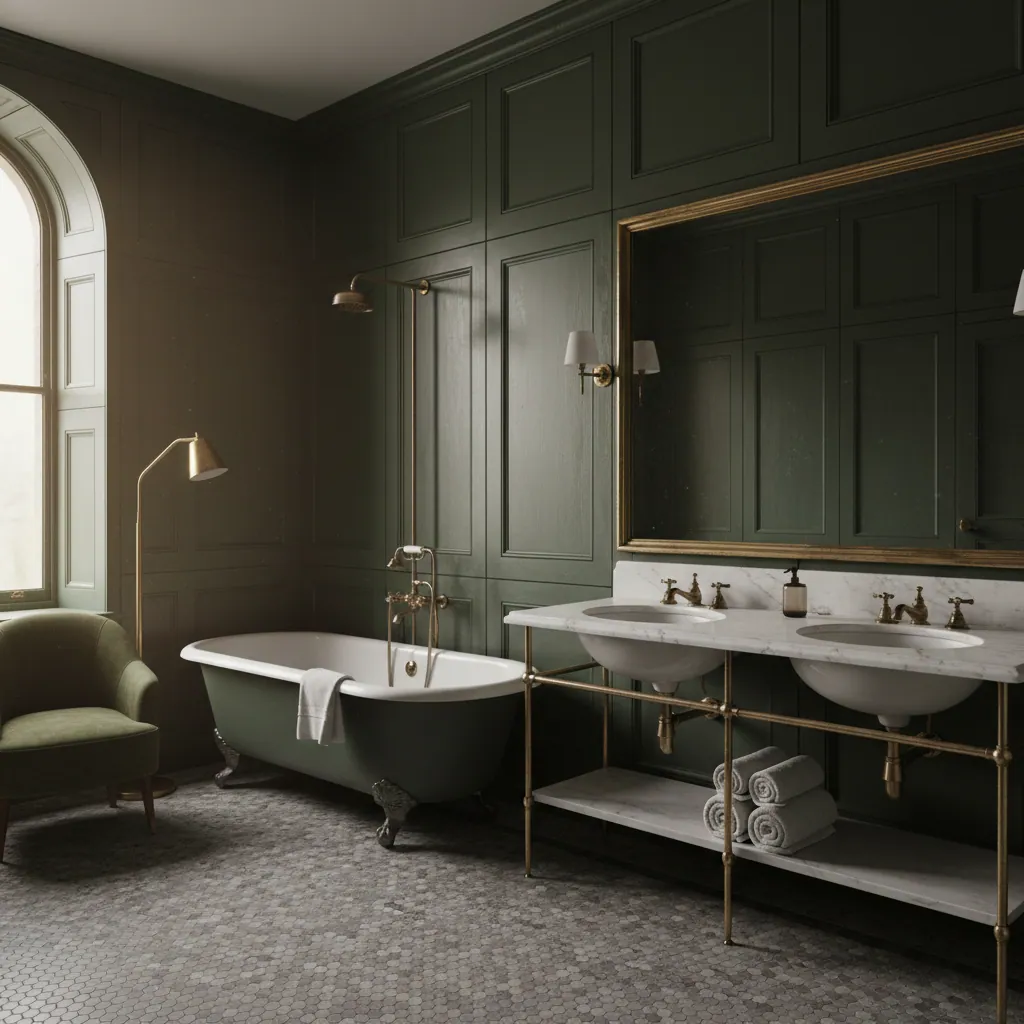
Drag a tired bathroom forward twenty years
Most of the bathrooms we are called to update are not broken — they are just dated. The suite still works, the shower still runs, but the whole room feels stuck in the decade it was fitted. The good news is that modernising is rarely about ripping everything out. It is about a handful of high-impact changes that read as “old” from the doorway, and swapping them for choices that read as current. This guide shows Plymouth homeowners where a dated bathroom gives itself away, and how a well-judged bathroom renovation brings it up to date.
What actually dates a bathroom
Before you change anything, it helps to know what the eye is reacting to. When a room “feels old,” it is rarely one thing — it is a handful of signals stacking up. Deal with these and the room jumps forward; leave them and no amount of new towels will help.
- Coloured suites. Avocado, pampas, sky blue — nothing dates a room faster.
- Small, busy tiles. Lots of grout lines make a room feel fussy and cramped.
- Patterned border tiles. The classic 1990s giveaway, mid-wall.
- Poor, flat lighting. A single dim ceiling fitting drains a room.
- Perished sealant and grout. Grubby, cracked lines read as neglected.
- Dated brassware. Chrome-and-plastic fittings and pillar taps.
- Dark or heavy colour schemes. They shrink and age a room.
- A boxed-in, cluttered feel. No storage, so everything is on show.
The reassuring part is that most of these are surface-level. If the layout works, the floor is sound and the plumbing is where you want it, you can keep all of that and change only what dates the room — which is exactly what makes updating so much cheaper than a full rebuild. Our note on renovating vs replacing helps you judge which camp your room is in.
The four changes that do most of the work
1. Lose the coloured suite
Nothing modernises a bathroom faster than swapping a coloured suite for clean white. White is timeless, easy to match and reassures any future buyer — and it never dates the way a colour does.
2. Go bigger and simpler on tiles
Larger-format porcelain with fewer grout lines makes a room feel bigger, calmer and easier to clean. One of the highest-impact changes you can make.
3. Fix the light and the air
Layered, brighter lighting plus a proper extractor fan transform how a room feels and stop the damp and mould that age it. Cheap to do, big payoff.
4. Update the fittings
A new thermostatic shower, modern brassware, a vanity and a frameless screen sharpen every detail the hand touches daily.

Add fresh flooring and repaint, and you have a bathroom that feels brand new even though half of it never came out. That is the art of modernising — spending where the eye and the day-to-day live, and leaving the sound, hidden work alone.
Colour, light and the illusion of space
A dated bathroom often feels smaller than it is, and modernising is as much about lightening and calming the room as replacing hardware. A few design moves cost little and change how the space reads entirely.
Keep the palette calm
Light, neutral walls and tiling make a room feel bigger and brighter, and they date far more slowly than a bold scheme. Save the personality for easily-changed touches like towels and a blind.
Layer the lighting
Bright, IP-rated downlights for the room plus a task light at the mirror beat a single ceiling fitting every time. Good light makes cheap finishes look better and tired ones look worse.
Reduce visible clutter
A vanity and a recessed niche turn a jumble of bottles into clean lines. Less on show reads instantly as calmer and more modern.
There is a lot of choice in tiles, finishes and colour, and getting the combination right is where a room goes from updated to genuinely smart — our bathroom tiling & flooring page walks through the options in detail.
Modernising a period or older home
Plymouth has a lot of lovely older housing, and the trick with a period bathroom is bringing it up to date without stripping out the character. You do not have to choose between the two — a traditional-style suite and period-look brassware can sit over thoroughly modern waterproofing, lighting and ventilation, so the room looks in keeping but performs like new.
Older rooms do come with quirks — out-of-true walls and floors, old wall build-ups, tired pipework worth renewing while the room is open. These are worth planning for rather than discovering mid-job. Our guide to period home bathroom renovation covers them in full.
Does modernising add value?
A tired bathroom is one of the first things buyers notice and mentally price down, so bringing it up to date is one of the more reliable improvements for saleability. The value comes from a clean, sound, well-finished room rather than expensive fittings — a calm, modern scheme reads well to almost everyone who walks in.
If resale is part of your thinking, our note on how a renovation adds value sets out what buyers actually respond to — and where the money is better kept in your pocket.
What it costs to update a dated bathroom
Because a cosmetic bathroom renovation keeps the layout and the plumbing, it usually falls in the lower half of the local range — from around £4,075 in Plymouth, where fitting costs sit roughly 9% below the UK average. The final figure comes down to two things: how much tiling you renew, and the quality of the new fittings. Keep the layout, choose mid-range porcelain and sensible brassware, and the number stays sensible; go for premium tiling throughout and top-end fittings, and it climbs.
Whatever the level, we put the whole job on one fixed written quote so the price is agreed up front and does not creep. For a full breakdown of where the money lands locally, see our cost of a bathroom in Plymouth page, and for stretching a tighter budget, renovating on a budget.
Dating your bathroom: what to tackle first
A quick way to work out where to start is to place roughly when your bathroom was fitted. Each era has its own tells, and knowing them points you straight at the changes that will make the biggest difference for the least money.
1970s–80s
Coloured suites, carpet or vinyl in patterns, and mid-wall border tiles. Start by swapping the suite for white and losing the busy tiling — that alone lifts the room a generation.
1990s–2000s
White suite but small, plain tiles, chrome-and-plastic fittings and a single dim ceiling light. Here the wins are larger tiles, modern brassware, a proper shower valve and better lighting.
2000s–2010s
Often fine underneath, just tired — grubby grout, dated screen, no storage. A deep refresh of sealant, grout, screen and a vanity is usually all it needs to feel current again.
Whichever era yours belongs to, the principle holds: tackle the loudest signal first. There is no point choosing designer taps while a coloured suite still shouts across the room. Fix the biggest tell, stand back, and you will often find the room needs less than you feared.
The finishing touches that read as “new”
Once the big signals are dealt with, it is the smaller, tactile details that tip a room from updated to genuinely smart. These are the parts your hand and eye meet every day, and they are where a modest spend goes a long way.
- A frameless or low-iron glass screen in place of a scaled, framed one — crisper to look at and easier to clean.
- Modern brassware in a current finish — a matt black or brushed tap instantly reads as recent.
- A heated towel rail that doubles as a design feature and a practical warm spot.
- Concealed or recessed storage so surfaces stay clear and calm.
- A single feature area — one wall or the shower recess in a premium tile — that lifts the whole room for little.
- Coordinated fittings in one finish rather than a mix of chrome, brass and black.
- A larger or better-lit mirror with its own task light at the basin.
- Neat, matching sealant lines — the quiet detail that reads as “freshly done”.
None of these move the plumbing or the walls, so they are quick, low-cost and low-disruption — the definition of a smart update. Get the combination right and even a modest budget produces a room that feels considered rather than merely refreshed.
If there is a single thread running through all of this, it is restraint. The bathrooms that still look current years later are almost never the ones that chased a trend the hardest — they are the calm, uncluttered rooms that got the basics right and added personality in the touches that are easy to change. A bold feature tile or a striking tap is a joy while you love it and a five-minute swap when you do not; the layout, the suite colour and the tiling behind them are what you live with for the long haul, so it pays to keep those quiet and let the details do the talking. It is the difference between a bathroom that dates on a fashion cycle and one that simply reads as “nicely done” for as long as you own the house — and the second is almost always the cheaper room to have chosen in the end. That is the quiet secret of updating a tired bathroom well: aim for timeless rather than fashionable, and you rarely have to do it twice.
Frequently asked questions
How do you modernise a dated bathroom?
Start with the changes that read as “old” from the doorway: a coloured suite, small busy tiles, poor lighting and tired sealant. Swap to a white suite, larger-format tiles with fewer grout lines, layered lighting and a proper extractor. Those four moves alone bring most bathrooms up to date.
Can I update a bathroom without replacing everything?
Yes. Much of what dates a room is surface-level. If the layout works, the floor is sound and the plumbing is fine, you can keep all of that and update the suite, tiling, lighting and finishes. That is far cheaper than a full strip-out and gives a brand-new feel.
What dates a bathroom the most?
Coloured suites, patterned border tiles, small mosaic-style tiling, chrome-and-plastic fittings from the 1990s, poor lighting and perished sealant are the usual culprits. A dark or busy tile scheme also makes a room feel smaller and older than it is.
Are coloured suites really worth replacing?
Usually, yes. A coloured suite dates a room instantly and does little for its appeal or value, and no amount of new tiling around it will fully modernise the look. A clean white suite is timeless, easy to match and reassures a future buyer.
How much does it cost to update a dated bathroom in Plymouth?
A cosmetic update that keeps the layout typically falls in the lower half of the local range, from around £4,075, since Plymouth fitting costs sit about 9% below the UK average. The final figure depends on how much tiling you renew and the quality of the new fittings.
Will updating a dated bathroom add value to my home?
A tired bathroom is one of the first things buyers notice, so bringing it up to date is one of the more reliable improvements for saleability. The value comes from a clean, sound, well-finished room rather than expensive fittings — a calm, modern scheme reads well to almost everyone.
Proud of every bathroom we fit
Get a fixed price for your bathroom
Tell us about your dated bathroom and what you’d love it to feel like. We’ll visit, suggest the handful of changes that will make the biggest difference, and hand you one fixed written quote — a modern room, finished properly, with no surprises.