
Quick answer
No — not if the wet room is designed properly. The whole floor is waterproof so it can get wet safely, but a well-planned wet room keeps water where you want it. A fixed glass screen, sensible layout and correct floor falls mean the shower zone gets wet and the toilet, basin and towels stay dry.
Waterproof everywhere, wet only where you want it
This is the most common misunderstanding about wet rooms, so let’s clear it up. A wet room is waterproofed across the whole floor and lower walls — that’s the tanking. But waterproof doesn’t mean everything is meant to get soaked every time you shower. The point of tanking the whole room is safety and durability: even stray splashes are harmless. Good design then controls where the water actually goes, so day to day the room behaves much like a normal bathroom with a generous open shower.
A screen does the heavy lifting
A single fixed glass panel beside the shower catches the bulk of the spray. It’s the most effective splash control there is, and it keeps the open, step-free feel — no door, no enclosure, just a clean pane of glass.
Layout keeps the dry zone dry
Put the shower at the far end, the toilet and basin nearest the door, and you naturally separate wet from dry. We plan this so you’re never reaching past the shower spray for a towel.
Falls move water fast
The floor is graded so water runs straight to the drain rather than spreading across the room. Quick drainage is half the battle in keeping the rest of the floor merely damp, not flooded.
Extraction dries it down
A good extractor fan clears moisture quickly, so the room dries between uses and you’re not left with a permanently wet floor.
How to keep towels and toilet roll dry
The practical worries are always the same — where do the towels go, and will the loo roll get soggy? Easy to solve at the design stage:
- Fit a screen between the shower and the rest of the room — the single biggest fix.
- Position towel rails and the toilet well outside the shower’s reach, near the door.
- Use a recessed niche for shower bottles so they’re in the wet zone and everything else stays out of it.
- Choose the drain wisely — a linear drain along the shower wall pulls water away from the dry side.
- Add a slight threshold or upstand at the room’s entrance if you want extra reassurance.
None of this compromises the level-access benefit — it just means the room is designed for how people actually use it. A wet room without a screen will spread water further, which is why we so rarely fit one without at least a single panel.
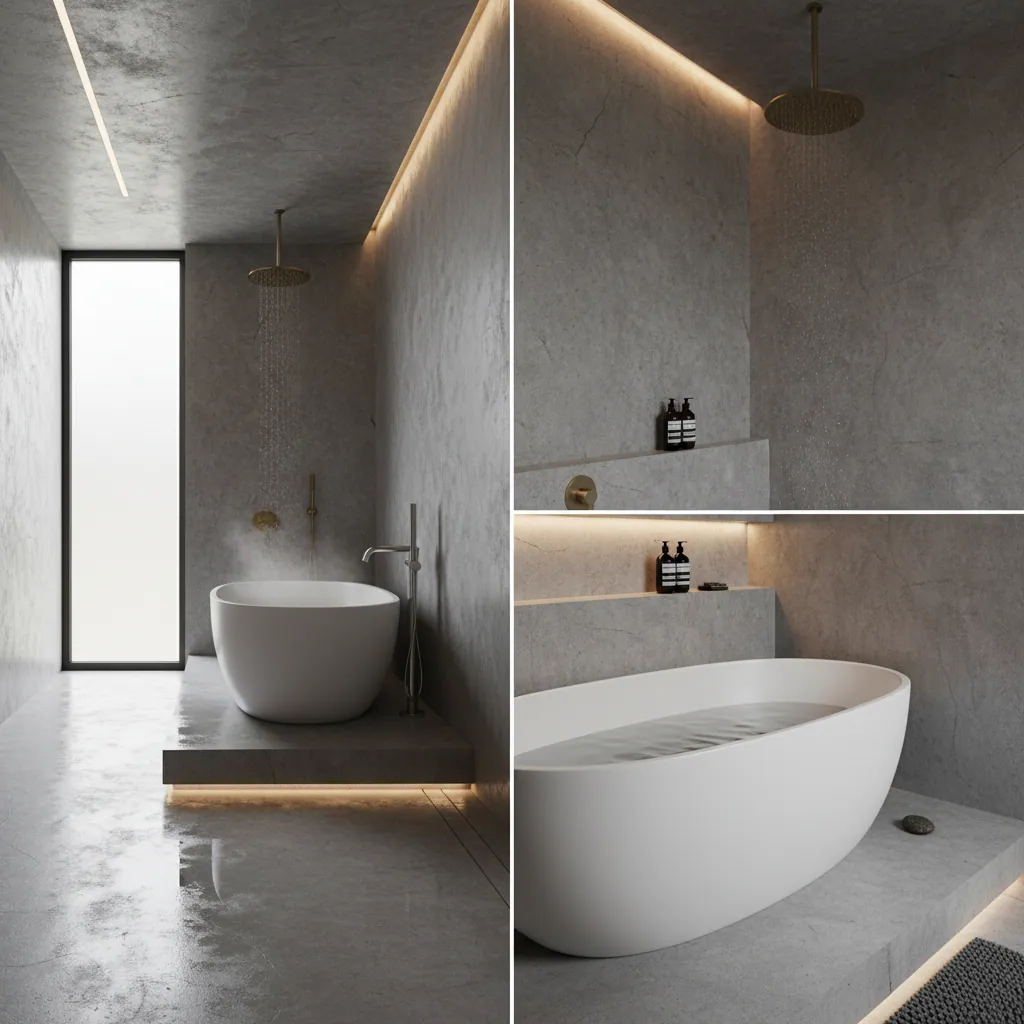
A fixed panel and a thought-through layout mean the shower end gets wet and the rest of the room stays comfortably dry.
So is a fully open wet room ever a good idea?
Sometimes, yes. For full wheelchair access or where someone is showered with assistance, a completely open wet room with no screen is often the right call — the priority is unobstructed access, and the whole-room waterproofing makes that safe. In those cases the room is designed around mopping up afterwards, and underfloor heating and good extraction help it dry fast. For most households, though, a screen is the sensible middle ground.
We talk this through with you so the design fits your life — accessibility, family use, or a sleek en-suite. See how we approach it on our wet room installation hub, and for accessible setups our accessible bathrooms page. If a fully open wet room isn’t what you want, a walk-in shower with a low-level tray keeps water even more contained — and our wet room cost page covers the budget either way.
Common questions
Will the toilet seat get wet in a wet room?
Not with a sensible layout and a screen. We position the toilet outside the shower’s spray, near the door, so it stays dry. Without a screen and with poor positioning it could catch splashes — which is exactly why we design around it.
Do you need a screen in a wet room?
Not structurally — the room is waterproof regardless. But for comfort and to keep the dry zone dry, we recommend at least a fixed panel in almost every wet room. The exception is full-access setups where unobstructed entry matters most.
Does the floor stay wet all the time?
No. With correct falls, a good extractor and ideally underfloor heating, the floor drains and dries quickly between uses, just like the tray area of a normal shower.
Designed for real life
Get a wet room that keeps the dry bits dry
We design the layout, screen and falls around how you actually use the room. Tell us your space and we’ll give you a fixed written quote.