
Quick answer
If the suite and tiling are sound, you can take years off a bathroom for a fraction of a refit. Regrout and reseal, repaint the walls and ceiling, swap taps, the toilet seat, handles and accessories, upgrade the lighting and mirror, and add storage. These cosmetic updates change how the whole room feels without touching the plumbing or stripping anything out.
First, check it’s sound enough to refresh
A refresh only makes sense if the bones are good. Before you spend on cosmetics, make sure the waterproofing is intact — no recurring damp, no soft spots behind tiles, no leak you keep re-sealing. If those problems exist, paint and new taps just hide them while the real issue gets worse, and you’ll be paying twice. Our checklist on the signs you need a new bathroom helps you tell the difference between tired and failing.
If it passes that test — the suite’s intact, the tiles are sound, it’s just dated — you’re an ideal candidate for a refresh rather than a full bathroom renovation.
The updates that make the biggest difference
Regrout and reseal
Fresh white grout and new silicone is the single highest-impact, lowest-cost update there is. Grubby, mouldy joints make a whole bathroom read as old — clean lines make it read as new.
Repaint
A coat of proper moisture-resistant bathroom paint on walls and ceiling instantly lifts the room. Light, neutral shades make it feel bigger and brighter.
Swap the small stuff
New taps, a new toilet seat, shower head, handles, towel rail and accessories. Inexpensive parts that the eye lands on, refreshed in an afternoon.
Upgrade the lighting
Brighter, warmer lighting and a backlit or demisting mirror change the mood completely — see best bathroom lighting.
Add storage
A slim vanity, shelving or a mirrored cabinet hides clutter and makes the room feel calm and considered — see adding storage.
New flooring
Swapping tired vinyl or flooring for fresh LVT or new tiles updates the room from the ground up without disturbing the walls or suite.
The bolder budget options
If the tiles themselves are the problem but you’d rather not strip the room, there are halfway measures. Tiling over existing tiles is possible where the surface is sound, giving a fresh look without a full strip-out — see tiling over tiles. And as a stopgap, dated tiles can be painted with specialist tile paint, covered in our note on painting bathroom tiles.
These won’t last like a full refit, but they buy time and a tidier look — useful if you’re a few years off replacing, or freshening up for a sale.
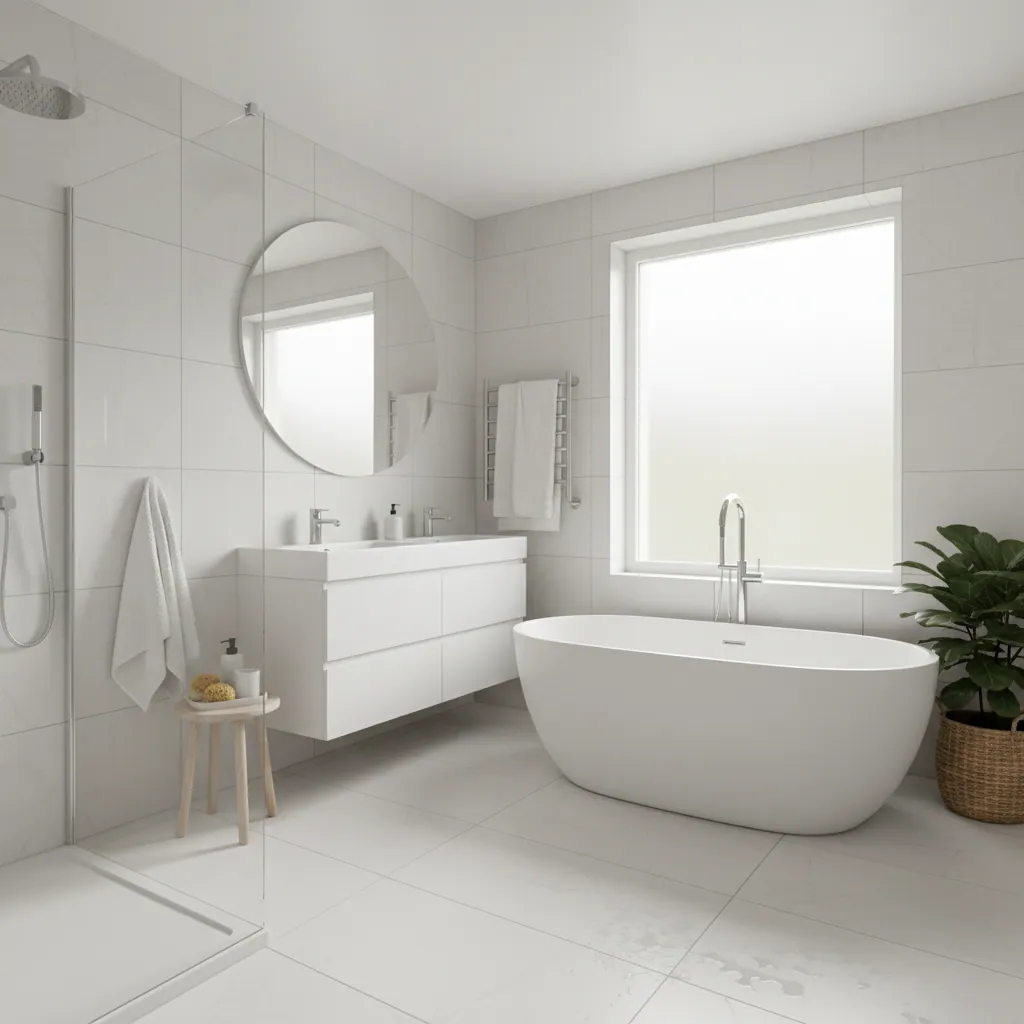
New grout, paint, lighting and fittings can make a sound bathroom feel close to new.
When a refresh isn’t enough
Refreshing has limits. If the layout frustrates you daily, the suite is cracked or stained beyond cleaning, or there’s any sign of water getting where it shouldn’t, you’re polishing a problem rather than fixing it. At that point a proper refit is the better spend — and because Plymouth runs around 9% below the UK average, a full bathroom here (typically £4,075–£10,870) may be closer to your budget than you’d think. We’ll always tell you honestly which side of the line your bathroom falls.
How much does a bathroom refresh cost?
Can I just replace the bath or shower?
Will a refresh add value before selling?
A worked example: a weekend refresh in Peverell
Take a sound but dated bathroom in a Peverell terrace — the suite’s fine, the tiles are intact, it just feels tired. A focused refresh here doesn’t need a strip-out or a skip. Over a couple of days we’d rake out and renew the grout, cut fresh silicone around the bath and shower, repaint the walls and ceiling in a moisture-resistant finish, swap the taps, toilet seat, shower head and handles, and fit a brighter demisting mirror with better lighting. Add new LVT flooring and the room reads years younger from the floor up.
The spend on that is a fraction of a full refit. Where a complete Plymouth bathroom typically runs £4,075–£10,870, a cosmetic refresh is often a few hundred pounds plus whatever flooring and fittings you choose to add — the highest return per pound you’ll find in a bathroom. Our Plymouth cost guide puts the two side by side.
Refresh mistakes to avoid
A refresh only pays off if you spend on the right things and don’t paper over a real problem. Watch for these three.
Covering, not curing
Painting over damp or re-sealing a leak that keeps coming back just hides it while it worsens. Fix the water first — cosmetics second, always.
The wrong paint
Standard emulsion peels in a steamy room. A proper moisture-resistant bathroom paint is the difference between a refresh that lasts and one that flakes by spring.
Half-measures on tiles
Tile paint and tiling-over-tiles buy time but won’t last like a refit. Great for a sale or a stopgap — not a permanent fix. Go in knowing that.
If a refresh turns out to be papering over cracks, a full bathroom renovation is the better spend — and across our Plymouth coverage we’ll tell you honestly which side of the line you’re on.
Refresh or refit — we’ll say which
Update your bathroom without the upheaval
We’ll look at what you’ve got and quote the smallest job that gets you the result you want — Plymouth and the South West.