Quick answer
The correct order is: strip out, first fix, waterproof, tile, second fix, then finish. Each stage prepares the one after it, so doing them out of sequence means undoing work later. The unglamorous middle stages — getting pipework and waterproofing right while the walls are open — are what decide whether the bathroom lasts, not the fittings that go on last.
The six stages, in order
A bathroom is built up in layers, and each layer relies on the one beneath it. Get the sequence right and every stage is done once, properly. Here’s how a renovation runs from bare walls to handover.
1 · Strip out
Protect the route in, then remove the old suite, tiles and flooring back to bare walls. This is where any hidden damp, rot or old wiring shows up — better found now than later.
2 · First fix
With walls open, the new pipework, waste runs and electric cabling go in for the basin, bath, shower, towel rail and extractor. Walls and floors are made square, sound and ready.
3 · Waterproof
Wet areas — and the whole floor in a wet room — are tanked. This membrane has to cure before anything goes over it, so it’s never rushed. See why waterproofing comes first.
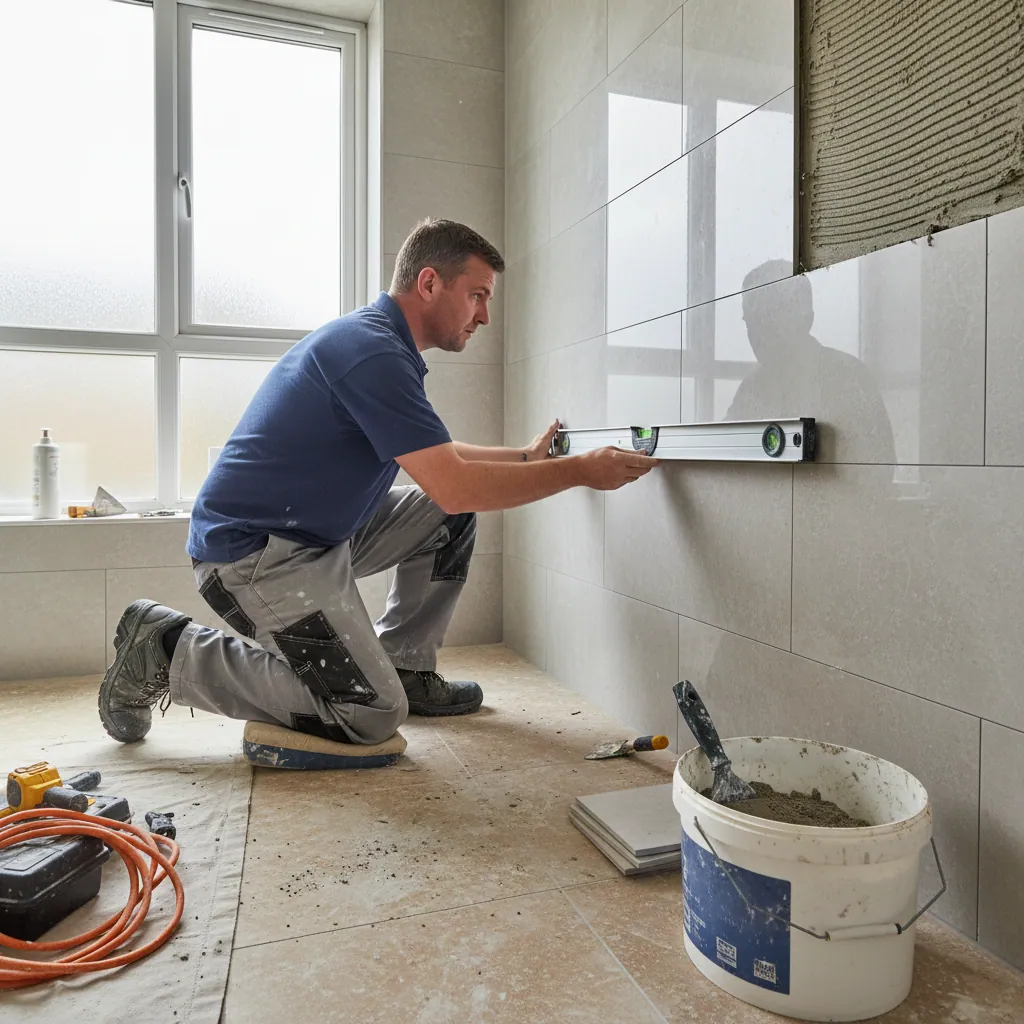
4 · Tiling
Tiles are set out, cut, fixed and left to cure, then grouted and sealed. It’s the longest stage because adhesive and grout need real curing time.
5 · Second fix
The suite, taps, shower, screen, lighting, towel rail and extractor are fitted, connected, tested and commissioned. Now it looks like a bathroom.
6 · Finish
Decorating, trims, silicone, mirror, accessories — then a full clean-down and a walk-round with you. The details that lift a good finish to a brochure one.
Why the sequence matters
The order isn’t arbitrary — each stage physically depends on the last. Skip ahead and you pay for it twice.
- Pipework goes in before tiling, or you’d chase out finished walls to reach it
- Waterproofing goes on before tiles, because it has to be the layer that stops water
- Tiling is done before fitting the suite, so cuts run clean to the floor and corners
- Decorating comes last, so it isn’t scuffed by everything that follows
This is also why a fixed timeline means something: the curing waits in the middle can’t be compressed without storing up problems. Our fitting order explainer covers the same ground from the fitter’s side.

Tiling sits after waterproofing and before the suite — each stage clears the way for the next.
What you should sort out before stage one
The best-run renovations are half decided before the first tile comes off the wall. Choosing your suite, tiles and finishes early — and having them on site before we start — keeps the job flowing without stop-start delays waiting on deliveries. It also locks the design so we can set out tiling and pipework around the exact fittings you’ve chosen.
This planning stage is where a fixed quote earns its keep: it forces every decision into the open up front, so the price and the schedule both hold. If budget is the driver, our guide to renovating a bathroom on a budget shows where to save without cutting corners on the stages that matter. For the full picture, see our bathroom renovation service.
Common questions about the order
Do you tile the floor or walls first?
When does the electrician come?
Can stages overlap to save time?
A plan before a single tile moves
Get a day-by-day renovation plan
We’ll quote your bathroom with a clear stage-by-stage timeline, so you know exactly what’s happening and when — across Plymouth and the South West.