
Quick answer
It’s worth it when the existing layout genuinely doesn’t work — and not much otherwise. Moving the bath, basin or toilet means re-routing waste pipes, which adds days and cost. If the room is cramped, awkward to use, or you’re forcing a shower where there’s no space, a new layout buys you years of a bathroom you actually enjoy. If it’s just dated, keep the layout and spend the saving on the finish.
What moving the layout actually involves
The fittings you can see are the easy part. The cost lives in the plumbing behind them. A toilet’s soil pipe needs a steady fall to the stack, so relocating it often means lifting the floor, re-running waste and sometimes fitting a pump or macerator. A bath or basin brings its own hot, cold and waste runs. Every one of those moves adds labour, materials and days to the job — none of which shows in the finished room.
That’s the honest trade-off. A like-for-like refit is the quickest, most predictable bathroom there is, as we explain in modernising without moving the plumbing. Changing the layout is a bigger project — sometimes well worth it, sometimes money better spent elsewhere.
When it’s worth moving
- The room is so cramped you can barely use the basin or get past the door
- You want to swap a bath for a walk-in shower and the space won’t allow it as-is
- The toilet is the first thing you see from the doorway
- There’s wasted dead space you could turn into a shower or storage
- You’re combining two rooms, or stealing space from a landing or cupboard
- Accessibility needs a level-access layout the current plan can’t give
When to leave it alone
- The layout works fine and the bathroom is simply tired
- You’re refreshing primarily for resale on a budget
- The room’s a sensible shape and everything’s reachable
- Moving plumbing would blow a budget better spent on a great finish
- You only need a fitting nudged a few inches along the same wall (often cheap)
The middle ground most people miss
It isn’t all-or-nothing. Shifting a fitting a short way along the wall it already sits on barely changes the waste run, so it’s often inexpensive — enough to fix a basin that’s too close to the bath, or a toilet that’s awkwardly placed. The big costs come from moving fittings to a different wall or relocating the soil pipe.
So before committing to a full reconfiguration, it’s worth asking whether a small tweak solves 80% of the frustration for a fraction of the cost. We’ll always quote both options so you can see the difference in black and white.
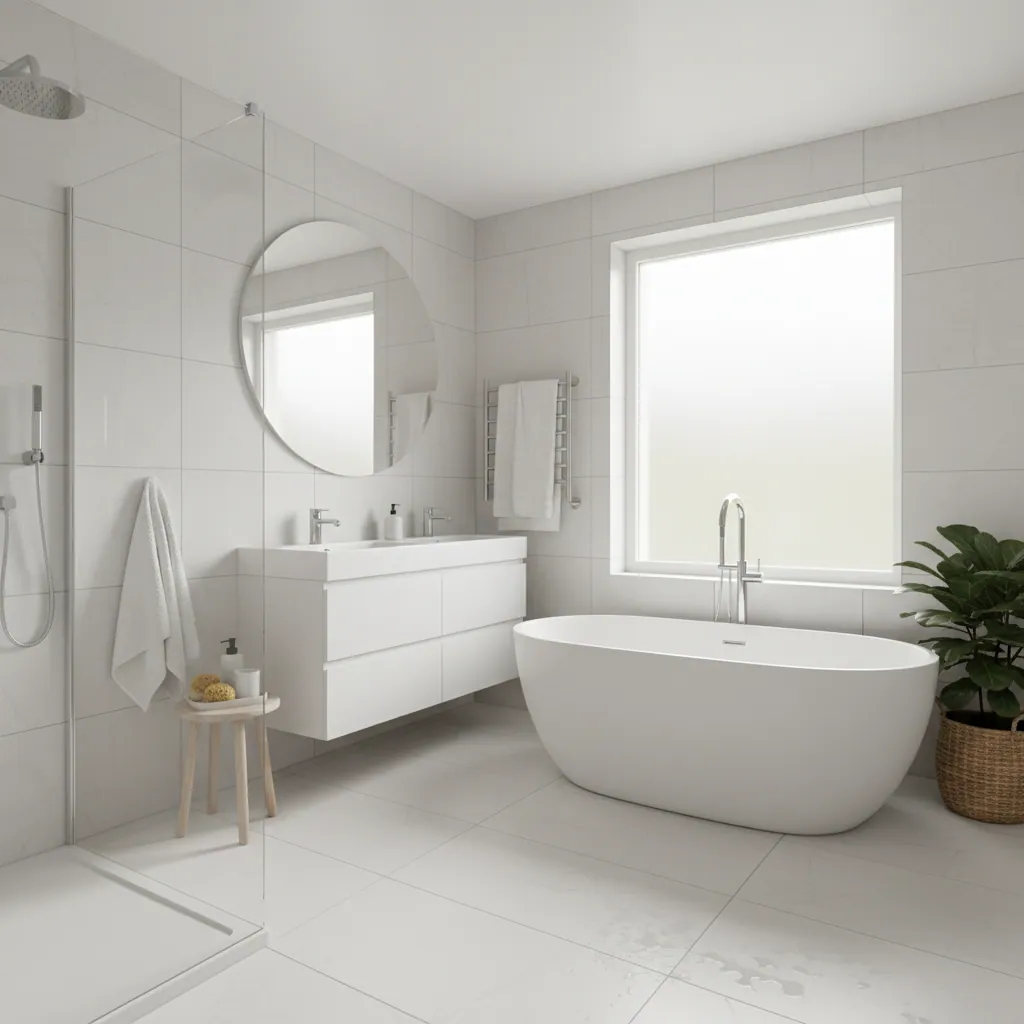
A reworked layout can be transformative when it unlocks a walk-in shower or proper storage.
Weighing the cost against the gain
A reconfigured layout can add real, lasting value — especially when it makes a small bathroom feel bigger or adds a walk-in shower buyers love. But the gain has to justify the spend. If you’ll live there for years and the current layout frustrates you daily, it’s almost always worth it. If you’re selling soon, a neutral refresh on the existing plan usually makes more financial sense. Our guides on whether a new bathroom adds value and bathroom renovation help you decide.
How much more does moving the layout cost?
Does a new layout add time as well?
Can you make a small bathroom feel bigger without moving plumbing?
See both options, side by side
Should your layout change? Let’s price it
We’ll quote the like-for-like refit and the reconfigured plan so you can decide with the real figures — across Plymouth and the South West.