Accessible & mobility bathrooms · Plymouth
A well-placed grab rail is one of the smallest changes you can make to a bathroom and one of the most powerful. It turns the nervous moment of standing up from the toilet or stepping out of a wet shower into a steady, confident one — and it is often the single thing that lets someone keep washing independently instead of relying on help. But a grab rail only works if two things are right: it has to be exactly where the hand naturally reaches, and it has to be fixed into something solid enough to take a person’s full weight in a fall. Get either wrong and a rail is worse than useless, because people trust it with their balance. This guide covers where rails should go, how they must be fixed, the types and finishes available, and how we make them look like part of a smart bathroom rather than a hospital. We fit grab rails as part of a full accessible bathroom or as a standalone job across Plymouth and the South West.
Placement matters more than quantity
The instinct is to add lots of rails “to be safe”. In practice a bathroom studded with rails is confusing, ugly and no safer — because a rail in the wrong place invites someone to lean on support that is not where their hand falls. The skill is putting the right rail in the right spot. So before we fix anything, we watch how the person actually moves: where they steady themselves getting into the shower, where they push up from the toilet, where they pause for balance at the basin. Then each rail goes where their hand naturally reaches, at a height that suits their build and grip.

The key positions
- At the shower entry and inside — a vertical rail to hold as you step or turn in, and a horizontal or angled rail for support while washing.
- Beside the WC — a fixed rail on the wall side and, where there is no wall, a drop-down rail that lifts out of the way, so you can push up from a seated position.
- By the basin — a discreet rail for a steadying hand while standing to wash or brush teeth.
- Along any route where balance is a worry, such as between the door and the toilet.
For the toilet specifically, rails work hand in glove with the right seat height — see our comfort-height accessible WC guide.
Fixing into solid backing — the part you can’t see
This is where the safety really lives, and where cheap installations fail. A grab rail screwed straight into a tile, or into plasterboard with plastic wall plugs, can pull clean off the wall the first time someone puts their full weight on it in a fall — exactly when they need it most. A rail must be anchored into something that will not give.
How we fix them properly
- Into solid masonry with the correct heavy-duty fixings, where the wall is brick or block.
- Into timber noggins or a plywood backing board that we build into the wall behind the plasterboard, at every planned rail position, before the room is tiled — the reason we love fitting rails as part of a refit, when the walls are open.
- Never relying on a tile or a single plasterboard plug to carry body weight.
When we design a full bathroom installation or accessible refit, solid backing goes in behind every future rail position as standard — so you can add a rail later, exactly where you need it, without ripping anything out.
Load and testing
Good grab rails are made and tested to recognised standards for the loads a person can put through them — leaning, pulling up, or falling against them. We choose rails rated for real body weight, fix them to match, and test every one before we hand the room over. If a rail is in an existing tiled wall where we cannot add backing, we will tell you honestly what can and cannot be made safe, rather than fixing something that only looks reassuring.
Types of grab rail
Straight rails
Fixed horizontally, vertically or at an angle. The workhorse of bathroom support — simple, strong and unobtrusive. Angled rails are handy by a shower where the hand travels as you move.
Drop-down rails
Hinged rails beside the toilet that fold up out of the way when not needed and drop down to give support on the open side. Ideal where there is no wall next to the WC.
Angled and combination rails
Shaped rails that follow the movement of standing up or stepping in, sometimes combining a vertical grab with a horizontal support in one fitting.
Fluted and easy-grip
Rails with a textured or fluted surface that stays grippy for wet or weaker hands, and slightly larger-diameter rails for those who cannot close a full grip.
Dual-purpose fittings
A sturdy designer towel rail or a shower riser rail can be specified to double as support — so the room gains safety without gaining an obvious “aid”.
Shower seats with support
A fold-down seat with its own support arm works alongside rails. See shower seats and mobility fittings for seating options.
Discreet finishes, not clinical white
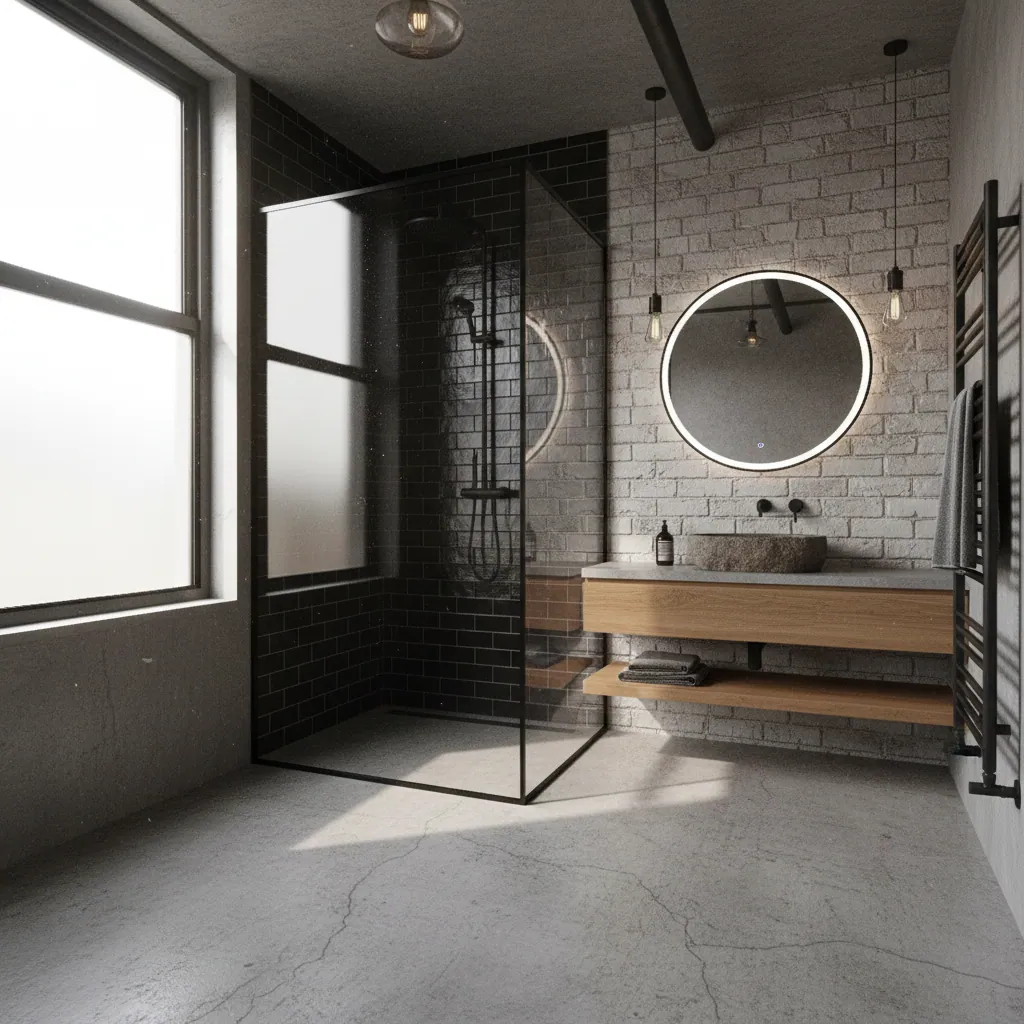
People put off making a bathroom safer because they picture white plastic rails and a room that looks institutional. It really does not have to be that way. Modern support rails come in brushed steel, matt black, chrome and finishes that sit happily alongside your taps, towel rail and shower — so they read as fittings, not aids. Chosen well and placed thoughtfully, a rail simply disappears into a good-looking bathroom, and a visitor would never register it as anything but a smart detail.
It is also never all-or-nothing. Plenty of our Plymouth customers start with the essentials — a rail at the shower, a drop-down rail by the toilet, slip-resistant flooring underfoot — knowing the room is set up so more can be added easily later. The right flooring is part of the safety picture too; see slip-resistant accessible flooring.
Can I just fit rails to my existing bathroom?
Often, yes — and it can be a quick, affordable win. If the walls behind the chosen positions are solid, or we can access them to add backing, we can fit rails without stripping the room. Where the only sound fixing points do not line up with where you actually need support, we will say so, and talk through whether a small reconfiguration or a level-access refit makes better sense. Either way you get an honest answer, not a rail bolted somewhere it will not truly hold. For where this sits in the bigger picture, see our accessible bathrooms hub and the cost of a bathroom in Plymouth.
Grab rail FAQs
Can grab rails be fitted to a tiled or plasterboard wall?
Only if there is something solid behind to fix into. A rail screwed into a tile or into plasterboard with plastic plugs can pull off the wall under real weight, which is dangerous. On a masonry wall we use correct heavy-duty fixings; on a stud wall we fix into timber noggins or a plywood backing board — ideally built in before tiling. If a wall has no sound fixing point, we will tell you honestly rather than fit something that only looks safe.
Where should grab rails go in a bathroom?
Placement matters more than quantity. The key positions are at the shower entry and inside it, beside the toilet (a fixed rail on the wall side and a drop-down rail where there is no wall), and by the basin for a steadying hand. Beyond that, any route where balance is a worry. We watch how the person actually moves and fix each rail where their hand naturally reaches, at a height that suits them — not to a generic diagram.
How much weight can a grab rail hold?
A properly made and properly fixed grab rail is designed and tested to take a person’s full body weight, including the sudden load of a fall or a hard pull to stand up. The rail itself matters, but the fixing matters just as much — a strong rail badly anchored is not safe. We choose rails rated for real loads, fix them into solid backing to match, and test every one before handover.
Do grab rails have to look clinical?
Not the way we fit them. Modern support rails come in brushed steel, matt black and chrome finishes that sit happily alongside your taps and towel rail, so they read as smart fittings rather than medical aids. Some genuinely double up — a sturdy designer towel rail or shower riser rail can be specified to take weight. Chosen and placed well, a rail simply blends into a good-looking bathroom.
Can you add grab rails without a full refit?
Often, yes. If the walls behind the positions you need are solid, or we can access them to add backing, we can fit rails without stripping the room — a quick, affordable improvement. Where the sound fixing points do not line up with where support is actually needed, we will be honest about that and talk through the alternatives.
Bathrooms for real life
Steady support, discreetly done
Tell us who the rails are for and what worries you most. We will visit, watch how you move, fix each rail where you actually reach and into backing that takes real weight — and give you one clear written quote.